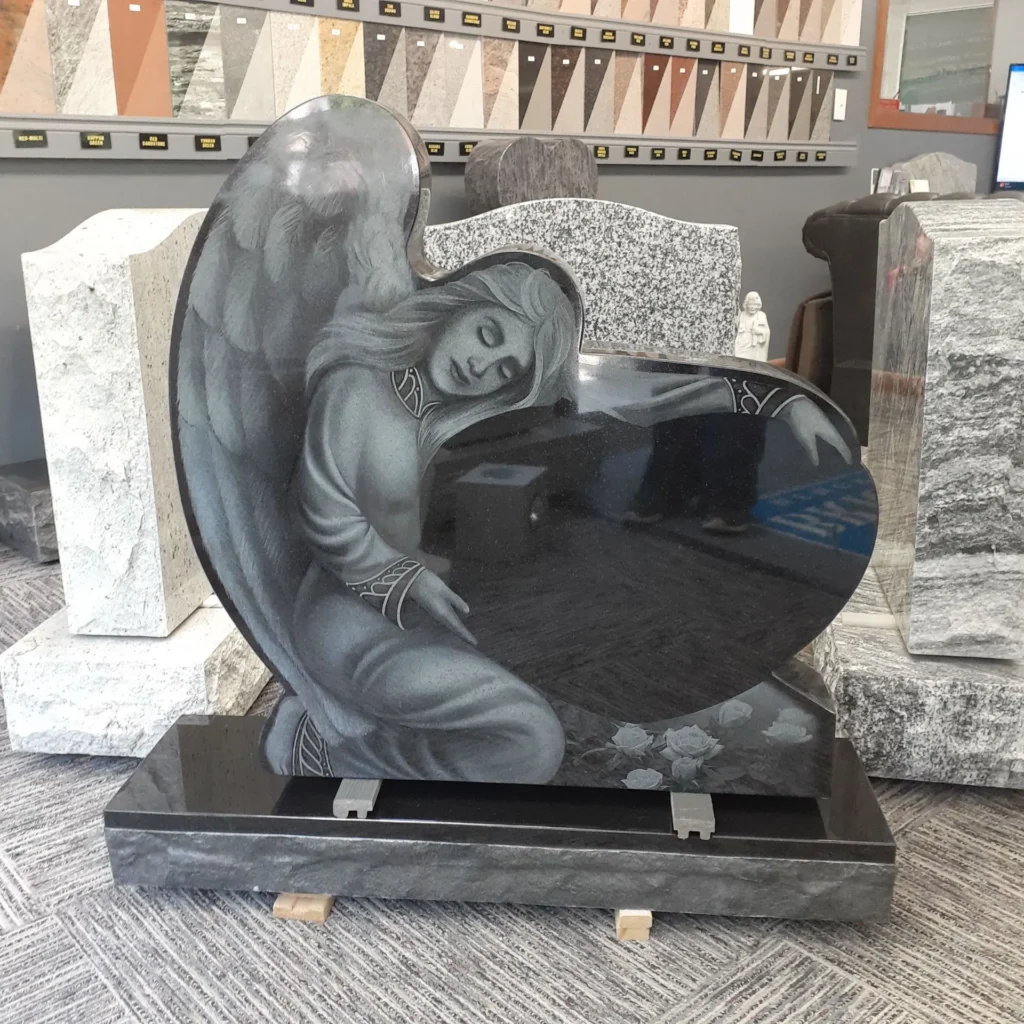
Personalizing a headstone means translating a specific life into design decisions that stay visible for generations. That includes granite color, engraved imagery, portraiture, a meaningful phrase, and decorative elements like bronze or a vase. Local weather conditions also mean those choices need to hold up through more than 100 freeze-thaw cycles per year, which affects how certain elements age on the stone. Working with a monument maker who handles design, engraving, and cemetery coordination in-house means those conditions are part of every recommendation from the beginning.
Most families come in not knowing where to start. Usually the best starting point isn’t the stone.
Start With the Person, Not the Stone
Before any design conversation starts, it helps to come in with a few words that actually describe the person. Not stone preferences. Not a headstone photo saved from a website. Two or three honest words.
Practical. Funny. Devoted. The kind of woman who fed anyone who walked through the door. A farmer who was up before dawn without fail. A veteran who carried his service quietly for decades.
Those words are the creative brief. When a design team knows who the person was, every choice that follows starts to make sense on its own. Imagery, color, lettering, finish all flow from the same place.
It also helps to bring a few photos from different points in the person’s life and write down any phrase or verse they returned to. A line from Scripture they kept on the refrigerator. Something they told their kids so many times the kids still hear it. These are the raw materials a designer actually works from, and the families who arrive with them tend to leave their first appointment with a design they feel good about.
The Elements That Make a Headstone Personal
Granite color
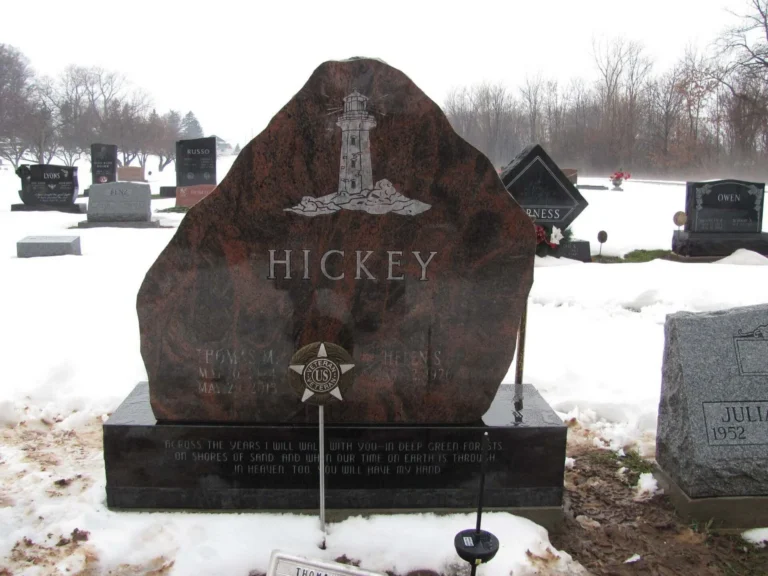
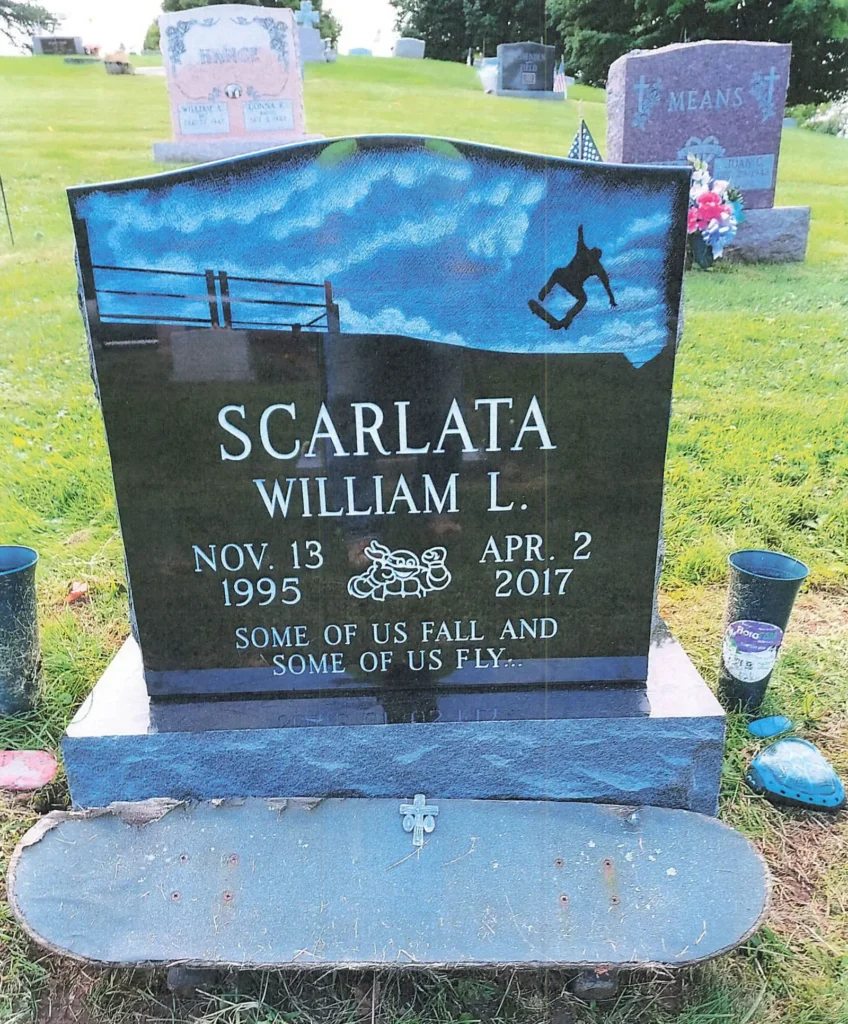
Granite color is the foundation of the entire design. Most people walk into a showroom expecting four or five choices. Woodside carries more than 90 named granite colors, from Academy Black to Bahama Blue to Dakota Mahogany, and the color sets the emotional tone before a single word is carved. A deep charcoal reads differently than a warm reddish-brown or a polished blue-grey. Color also affects which engraving techniques work well on the finished stone, which is worth knowing before settling on a preference.
See actual samples in person before deciding. Screens can’t show granite’s grain, reflectivity, or true finish at full scale.
Portraits and photos
A photo of the person changes the feel of a memorial entirely. It gives anyone who visits something immediate and human to connect with, including people who never had the chance to meet them. There are three ways to include one.
A porcelain photo medallion gives you a full-color, weather-resistant image mounted to the stone face. These have held up in local cemeteries for over a century. The concern about them cracking in freezing winters is largely unfounded when they’re installed correctly.
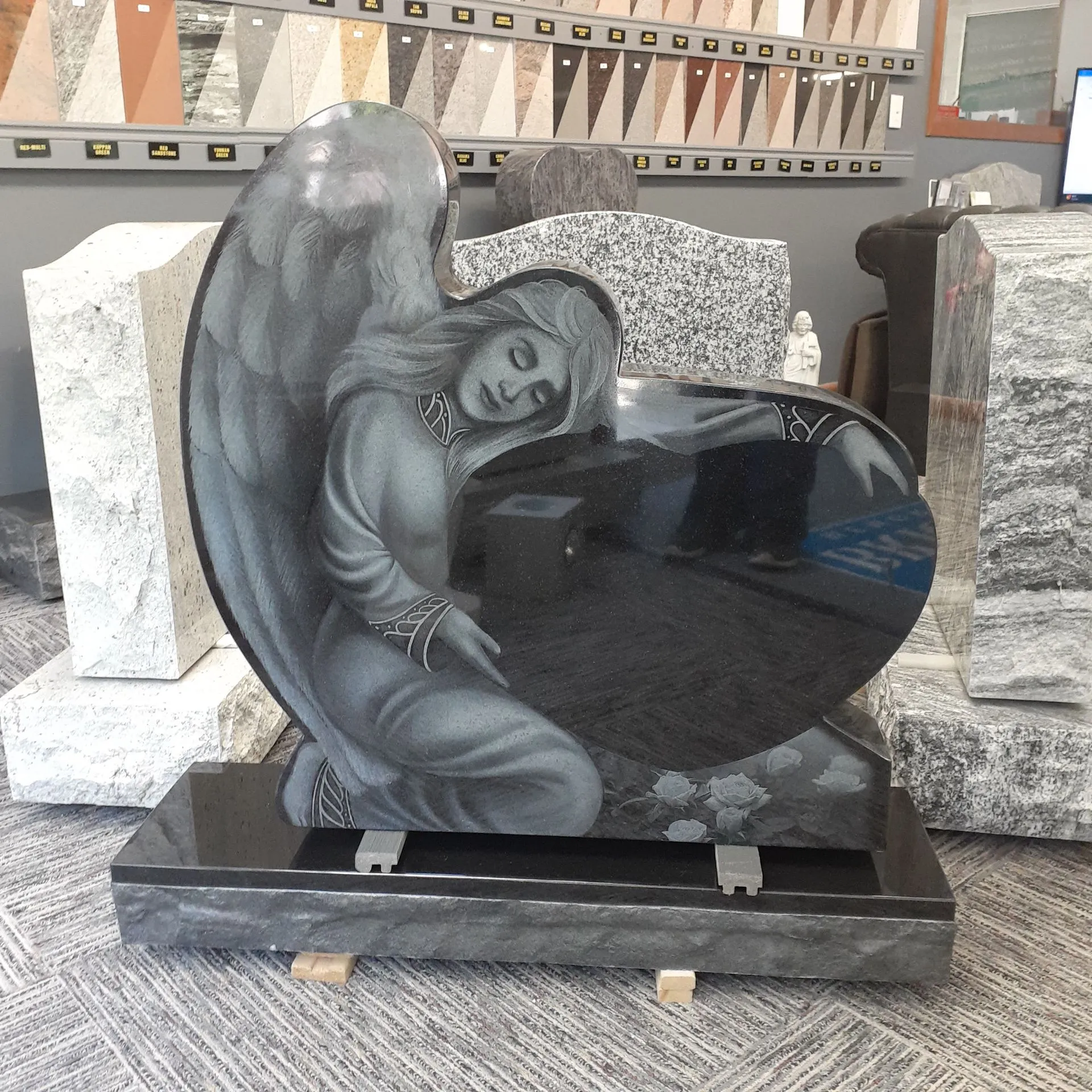
A laser-etched portrait burns a photorealistic, grayscale image directly into the stone surface. It works best on dark granite, where the contrast between the polished and etched areas is sharpest. On lighter stones, a different approach is needed and that’s covered below.
A hand etched portrait is drawn directly into stone by an artist rather than produced by a machine. Each one is original. Laser etching reproduces a photograph with precision. Hand etching produces something more expressive, shaped by the artist’s reading of the image. The two can look very different even when working from the same photo. Woodside’s in-house hand etching is done by [CLIENT CONFIRM: Melissa Trinidad, recruited from Georgia stone quarries specifically for this work].
Hobby and life-scene imagery
Custom imagery is where a headstone stops looking like it could belong to anyone. A farm scene at dusk. A fishing rod over still water. Knitting needles mid-project. A tractor on a ridge. A beloved dog stretched out in the yard. These images are sandblasted or hand-etched directly into the stone, and they tell anyone who visits something real and specific about the person beneath it.
Bronze elements
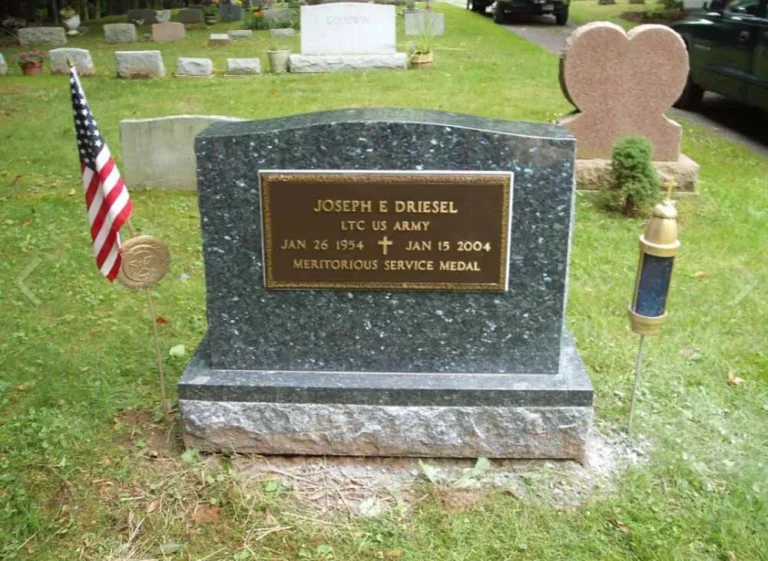
Bronze plaques, emblem medallions, and VA-supplied military markers add visual warmth and weight to a granite design. In Western New York winters, bronze attachments deserve a specific conversation before you commit to them. That comes up in the climate section below.
Inscriptions
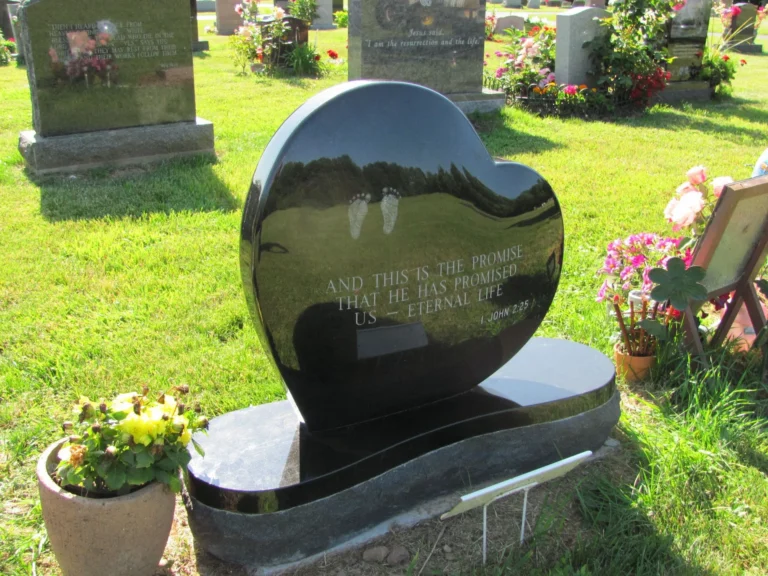
A well-chosen phrase can carry more weight than any image. It doesn’t have to be long. A nickname, a Scripture verse, or something the person said so often the family still hears it in their heads. Five words can say more than five images.
What Cold Winters Actually Change About Design Choices
Western New York averages more than 100 freeze-thaw cycles per year. The frost line sits between 42 and 48 inches deep, and lake-effect moisture runs through most of the winter. None of this limits what’s possible in headstone design. But it does change which elements hold up cleanly over 20 or 40 years, and that’s worth knowing before committing to specific add-ons.
What holds up very well in this climate:
- Polished dark granite with laser-etched or sandblasted imagery. The etching is recessed into the stone itself, so freeze-thaw cycles have almost nothing to act on.
- Sandblasted symbols and lettering. Same durability as laser etching. Recessed into the stone, not applied on top.
- Granite-integrated vases. Reliably durable in cold climates.
- Properly installed porcelain photo medallions. Clear, intact porcelain photos from the early 1900s are still visible in regional cemeteries today. The installation method matters more than the material itself.
What deserves a conversation before ordering:
Bronze attachment pieces are the element that requires the most attention in cold-weather regions. Bronze and granite expand and contract at different rates in cold weather. A bronze piece that isn’t properly secured can develop small gaps at its joints over time. A well-installed bronze element lasts for decades. Before ordering any bronze attachments, ask how they’re secured into the granite and whether the method accounts for the different expansion rates of each material through repeated freeze-thaw cycles.
Sculptural elements that project outward from the stone carry more risk here than in warmer climates. Anything that collects water and then freezes repeatedly can develop cracks at the connection points over time. That’s not a reason to avoid them, but it’s a question worth asking your monument maker before you commit to a specific design.
Painted fill in lettering tends to lose contrast faster through repeated freeze-thaw cycles than in milder regions. Ask whether the design’s readability depends on paint or on the stone’s natural contrast.
When the person advising your design is also the person manufacturing and installing the memorial, these conversations happen before you’ve committed to anything. That’s not the case with every monument company.
When You Want a Portrait on a Lighter-Colored Stone
Families often settle on a granite color first, picking something warm and distinctive like Bahama Blue or a polished reddish-brown, and then realize they also want a photorealistic portrait. The problem is that laser etching produces its sharpest result on dark granite. On lighter stones, a laser-etched image can look washed out and hard to read at any distance.
There’s a solution most families don’t know about. A black granite inset panel can be built into the overall design. The main stone stays in the family’s chosen color. A carefully sized section of dark granite holds the portrait. When the design is executed well, the inset reads as a deliberate part of the composition, not an afterthought.
Porcelain photo medallions sidestep the issue entirely. They produce full-color images and mount cleanly to any granite surface regardless of color.
If you’re unsure which approach fits the vision, the design team can walk through both options and show what each will look like on the specific granite being considered before anything goes into production.
If This Stone Will Eventually Be for Two People
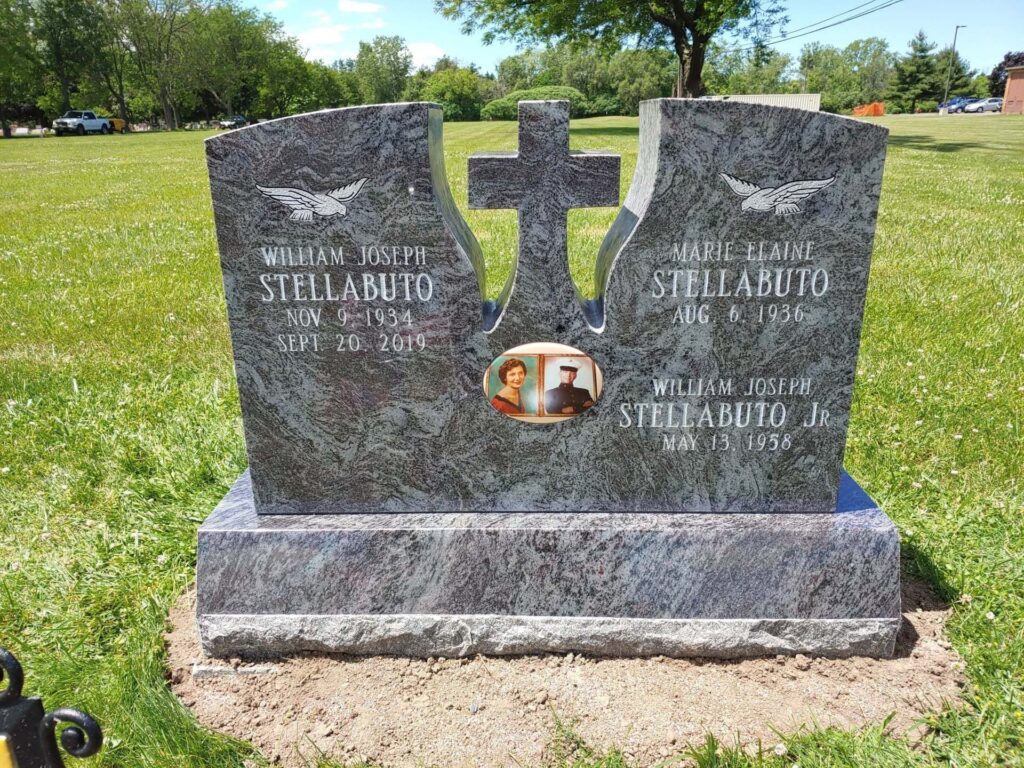
This comes up more than most families expect, and planning for it at the start is far easier than correcting it later. A memorial designed for one person today may need to carry a second inscription someday, and the original design decisions either make that straightforward or create problems.
Leave clear surface space on one panel for a future name, birth year, and death year. Centered imagery, centered epitaphs, and vases in certain positions can make a second inscription feel crowded or impossible to add cleanly when the time comes.
Choose a granite finish that can be matched years down the road. When a second inscription is added later, the lettering needs to read consistently with the original. Some finishes make that easier than others, and it’s a question worth raising in the first design meeting.
Mention companion planning early. It takes five minutes to get right from the beginning.
What to Bring to Your First Design Appointment
Coming in prepared makes a bigger difference than most families expect. You don’t need decisions. You need a few raw inputs.
- Three to five photos of the person, from different points in their life. Not just the most recent one. These give the design team real images to work from and often suggest custom imagery that never would have come up in conversation.
- Two or three words that described them. This tells a designer more about direction than a long discussion about what kind of stone looks good.
- The cemetery name and section. Woodside’s team can pull that cemetery’s specific rules before the meeting, so the design conversation doesn’t run into an approval issue halfway through. Different sections within the same cemetery often have different requirements, and catching that early protects the design from the start.
- Any imagery that resonates, even if it has nothing to do with headstones. A painting they loved, a photo of a place that mattered to them, an image from their favorite season. These often become the best starting point for custom scene work.
Families who browse completed memorial designs from Woodside’s portfolio before an appointment usually find it much easier to describe what they’re looking for once they can point to something specific. For families who want to sketch ideas on their own first, the online tool makes custom memorial planning possible before anyone asks you to make decisions in person.
Common Questions About Headstone Design Ideas
Can I put a photo on any granite color?
Laser-etched portraits show clearest on dark granite. That’s where the contrast between the polished surface and the etched area is sharpest. On lighter-colored stones, a black granite inset panel can be built into the design to hold the portrait while keeping the overall stone in the chosen color. Porcelain photo medallions work on any granite color and reproduce images in full color.
What design elements hold up best in freezing winters?
Polished dark granite with sandblasted or laser-etched imagery holds up very well through severe freeze-thaw cycles. The imagery is recessed into the stone, so cold weather has very little to act on. Properly installed porcelain photo medallions have held up in this specific climate for over a century. Bronze elements last well when secured correctly; the key is whether the installation accounts for the different expansion rates of bronze and granite in cold weather.
How do I know if my design will be approved by the cemetery?
Cemetery rules vary by section, and different areas within the same cemetery can have different requirements. Before any design goes into production, Woodside works directly with the cemetery to confirm what’s permitted in the specific section where the stone will be placed. That step happens before production begins, not after you’ve already invested time in a design.
What’s the difference between hand etching and laser etching for a portrait?
Laser etching uses a computer-guided process to reproduce a photograph with high precision. The result is photorealistic and consistent. Hand etching is drawn directly into the stone by an artist, making each portrait original. The choice comes down to whether a family wants exact photo reproduction or something more expressive, shaped by an artist’s interpretation of the image.
Can I start thinking through the design before my first appointment?
Yes. Browsing past work from Woodside’s portfolio is a good first step. Seeing real examples makes it much easier to describe what feels right when you sit down with a designer. The online design tool is also available for families who want to put rough elements together before the first conversation.