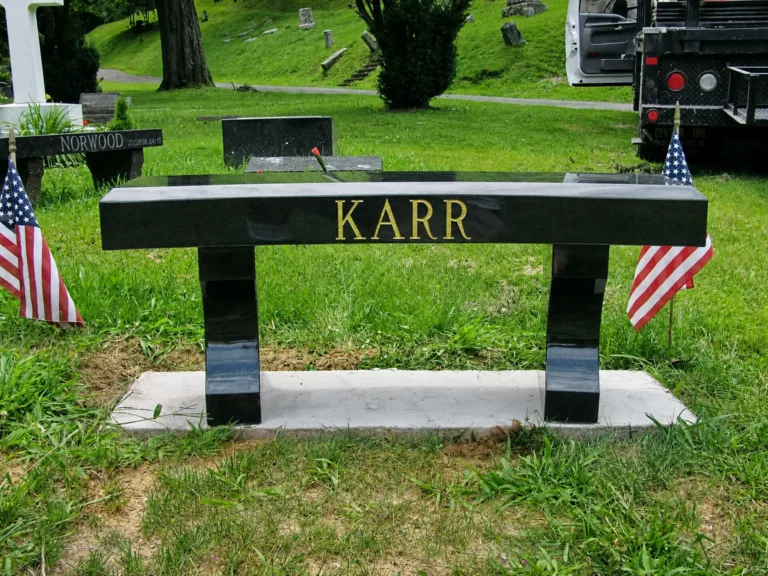
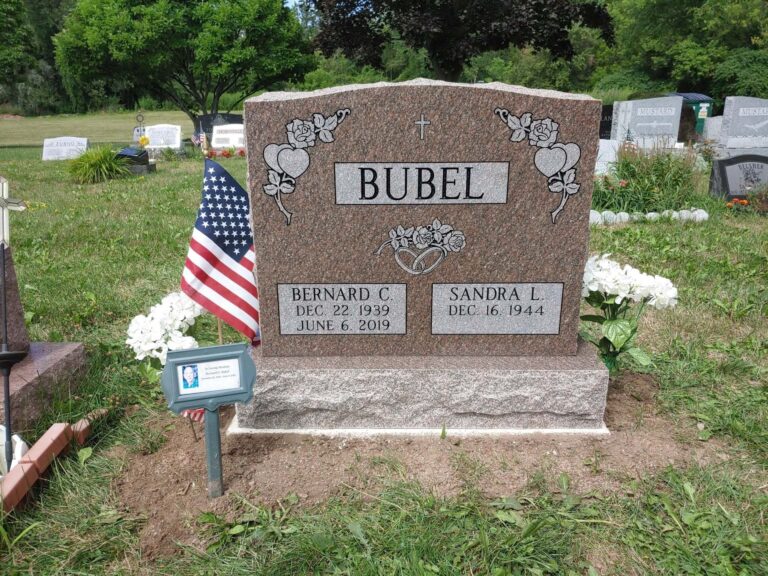
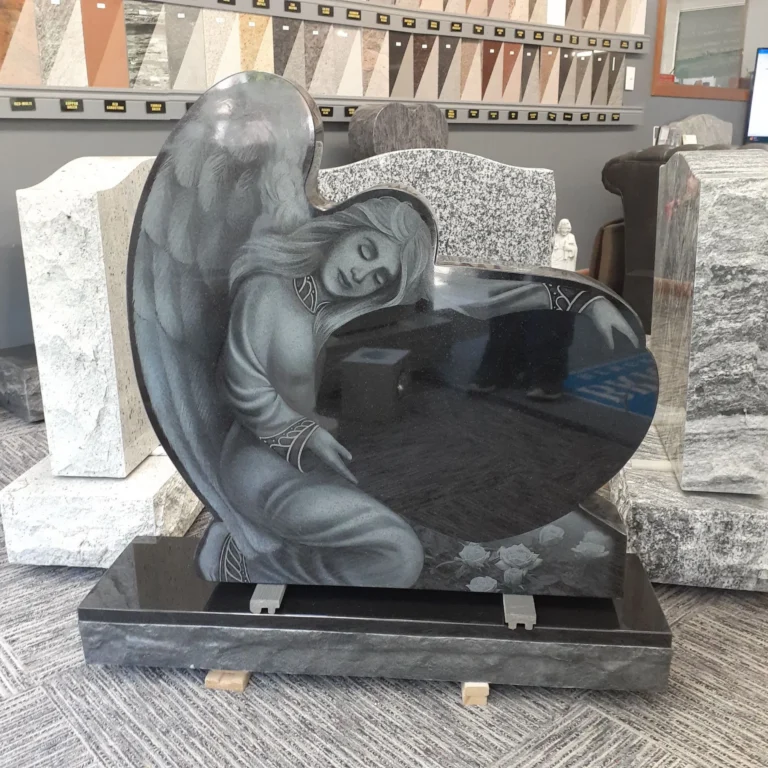
Sandblasting cuts letters permanently into granite. Once an inscription is set, correcting it means grinding the stone down and re-engraving the area. On a polished black or gray surface, that repair is usually visible. In most cases, replacing the piece entirely is the only option that looks right. That’s expensive, it takes time, and the family has to go through the entire approval process again.
Every mistake on a headstone inscription happens before the stone is cut, not after. The proof of approval feels like a formality. It isn’t.
This guide is written for families who are about to finalize an inscription or review a proof. Not for monument professionals. For you, and the choices you still have time to get right.
The most common headstone engraving mistakes, including wrong dates, spelling errors, overcrowded text, and missing maiden names, happen because families approve a proof without a structured review process. Sandblasting cuts letters permanently into granite; corrections require grinding the stone and re-engraving, which is costly and often leaves a visible repair. Verifying every date against an official document, reading the proof aloud, and having a second family member review it independently prevents most errors before production begins.
Check the Dates Against the Official Document, Not Your Memory
Families rely on dates from memory more than they realize. Under grief, that recall is even less reliable. A digit transposed in a birth year is the most common factual error found on headstones, and it almost always traces back to someone working from memory rather than pulling out the actual certificate.
Before you submit the inscription text, pull the death certificate and the birth certificate. Compare each date digit by digit against the proof. Not as a whole number. One digit at a time. That’s the step that catches transpositions that a quick read-through misses entirely.
Maiden names are another common omission. If the family wants the deceased’s birth surname on the stone, confirm the exact format before the proof goes to production. “Nee Sullivan,” “born Sullivan,” and listing it as a middle name each read differently once cut in stone. Pick one format, confirm it in writing, and make sure the proof matches it exactly.
Middle initials, suffixes like Sr. or Jr., and generational designations like III should each be matched to the official record. Assuming them from habit is where small errors get through.
More Text Means Smaller Letters, and Smaller Letters Are the First to Go
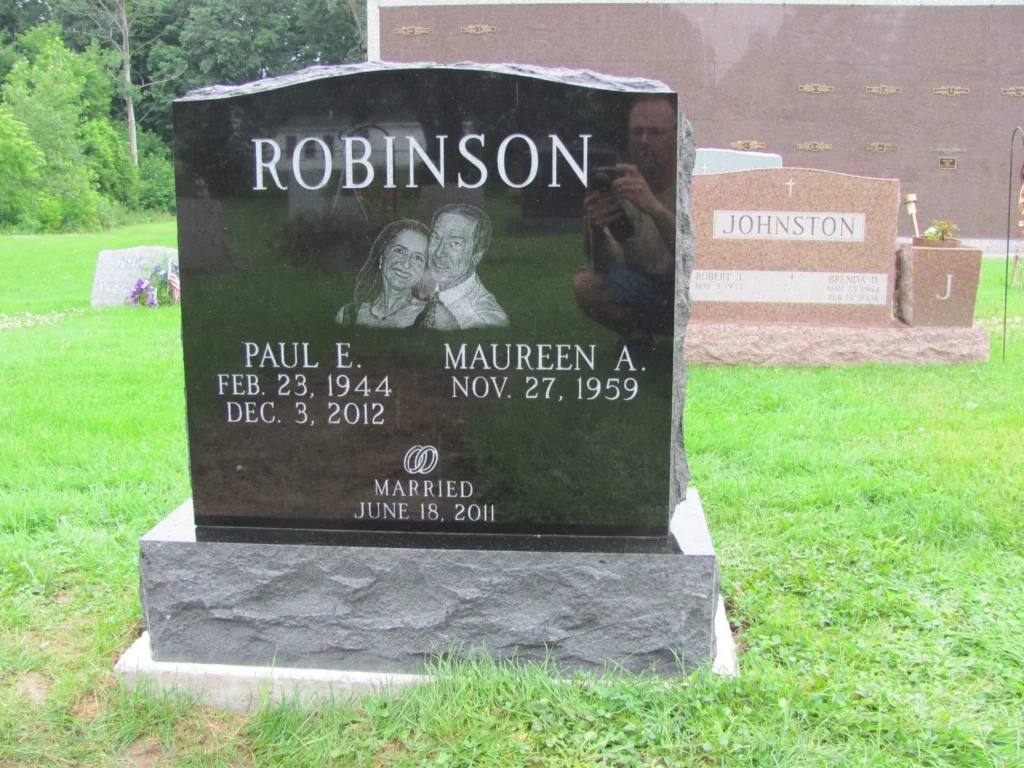
Every character added to an inscription forces the font smaller to fit the available space. On a standard flat marker, once the letter height drops below a certain size, the sandblasted grooves are too shallow to hold fill paint reliably over time. The edges start fading within years, not decades.
That gets worse in a freeze-thaw climate. Shallow grooves collect moisture in fall. When that moisture freezes overnight, the expansion works against the letter fill from the inside. Finer lettering loses paint faster than larger text does. In a Western New York winter, that difference shows up within the first ten years on an exposed marker in an open cemetery section.
Families who regret overcrowded inscriptions don’t always notice the problem immediately. They notice it ten years later when the fine lettering starts fading and the stone is harder to read from a few feet away.
All-caps text also reads harder from a distance than mixed case. Before committing to a full-capitals layout, ask to see the proof in mixed case as well. The readability difference at cemetery distance is often significant.
The name, the dates, and one clear line are usually enough. The best inscriptions are the ones that stay readable for generations.
Read the Proof Out Loud, Not Just with Your Eyes
Reading a proof silently is how errors survive to production. The brain reads ahead when it’s scanning text it expects to see. It fills in what should be there, not always what is there. That’s how a transposed digit or a misspelled name can survive three silent read-throughs without being caught.
Reading the proof aloud, word by word and punctuation mark by punctuation mark, breaks that pattern. It forces the brain to process each element separately. It’s not a special technique. It’s just what works.
Here’s the full process: print the proof on paper. Read it aloud from start to finish, including every comma, period, and apostrophe. Then pass it to a second family member who hasn’t been closely involved in writing the inscription. Ask them to do the same thing cold, without being told what to look for. Fresh eyes catch what tired ones don’t.
While reviewing, go through each element specifically:
- Full legal first name. Not a nickname or shortened version unless the family explicitly chose it.
- Middle name or initial. Should match the certificate exactly, not be assumed from habit.
- Maiden name. Format confirmed and spelled correctly against the official record.
- Birth and death years. Compared digit by digit against the death and birth certificates.
- Abbreviations. Military ranks, fraternal designations, and religious titles are common error points. Confirm each one is standard and unambiguous.
- Punctuation. A misplaced comma or missing apostrophe is visible to every visitor for generations. Read each mark out loud.
- Line breaks. Does the text split at a natural pause, or does it cut mid-phrase in a way that reads awkwardly when you’re standing a few feet from the stone?
Don’t approve the proof until both people have finished that review. A reputable company won’t push you to sign before you’re ready.
Some Engraving Methods Hold Up Better Than Others in a Cold Climate
Most headstone inscriptions are sandblasted. A rubber stencil is applied to the polished granite surface, and a high-pressure stream of aluminum oxide erodes the exposed stone to form letters and designs. The grooves are deep enough to hold fill paint through repeated temperature shifts and years of outdoor exposure.
Laser etching works differently. It removes the polish from the granite’s dark surface layer, revealing the lighter stone beneath to create contrast. The result is detailed and photographic, which makes it the right fit for portrait work and fine imagery. But the impression sits shallower than a sandblasted inscription.
In upstate New York, a typical year brings dozens of freeze-thaw cycles in open outdoor conditions. Shallower impressions face more exposure pressure over decades. Moisture works into the surface, freezes, and expands. Over many years, laser-etched portraits in exposed open sections can lose definition in ways that sandblasted text typically doesn’t.
That’s not a reason to rule out laser etching. It’s a reason to ask your specialist which method fits both the design and the specific location of the marker in the cemetery. For text that needs to stay legible for generations in a WNY climate, sandblasted lettering holds better long-term. For portrait and fine-detail work, we do hand etched headstone work in-house and can advise on the right method based on both the design and where the stone will be placed.
Letter Fill Paint Doesn’t Last Forever in a Western New York Winter
The engraved letters on most granite memorials leave the shop filled with color. A pigment applied into the carved grooves creates contrast against the polished surface. What that pigment is made of matters more than most families expect.
Professional monument companies use a commercial-grade enamel called lithichrome. It’s formulated to bond with porous stone and hold up under outdoor conditions. Standard outdoor paint uses a different binder. It doesn’t adhere properly to granite under temperature stress, and it fails faster inside carved grooves than it would on a flat exterior surface. Families who try to touch up fading letters themselves with hardware store paint often make the problem worse.
Here’s what happens to letter fill in a WNY winter. Road salt gets tracked into cemeteries through foot traffic and vehicle access. It’s corrosive. Freezing rain fills the grooves. Water expands as it freezes. Ice pressure pushes the paint out from the inside. Fill on a marker sitting in an open section with no shade degrades noticeably faster than the same enamel on a sheltered stone in the same cemetery.
With lithichrome applied professionally, most inscriptions hold well for 10 to 20 years before a touch-up is worth considering. In low-ground sections where water collects, or spots with consistent road salt exposure, the lower end of that range is more realistic.
Before you finalize the order, ask what type of fill paint is used and what the expected maintenance interval is based on where the marker will sit in the cemetery. If the lettering ever needs refreshing, a professional lettering restoration service can clean the grooves and reapply paint without touching the original carving.
Cemetery Rules Cover More Than the Stone’s Size
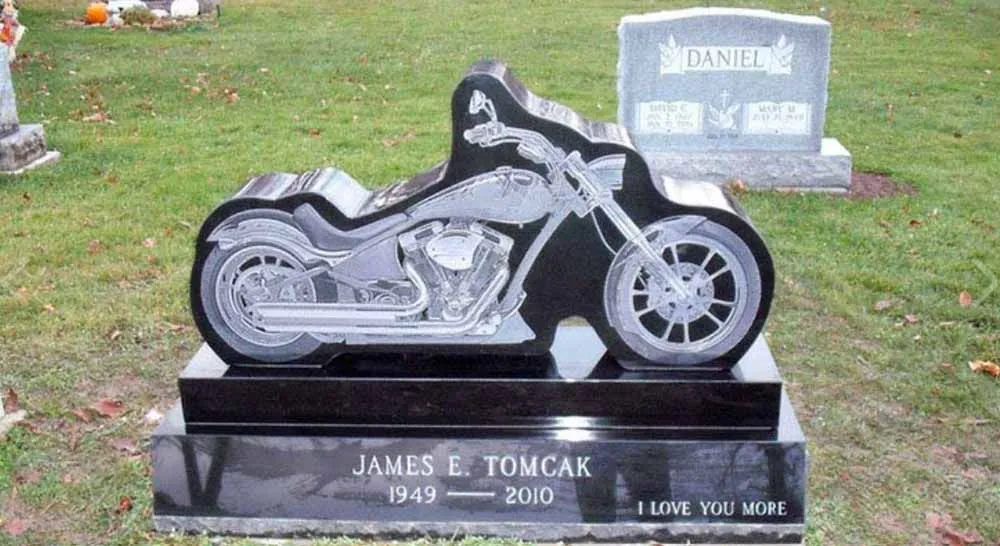
Most families know cemeteries have rules about headstone dimensions. Not as many know those rules can extend into the inscription itself.
Some cemetery sections restrict imagery, limiting religious symbols to a list of approved emblems, requiring documentation for military insignia, or sending artwork through a content review before installation is approved. Cemeteries also have content guidelines for epitaphs. A stone that violates those guidelines can be refused at installation after production is already complete. By that point, the cost of the piece is already spent.
Flat marker sections often have constraints on how close the stone sits to grade, which limits the usable inscription area. If that area is smaller than the design assumes, the font has to shrink. And once the font shrinks, you’re back to the legibility and paint-fill problem from the section above.
Confirm all of this with the cemetery before the proof is finalized, not after. Ask specifically: what is the maximum inscription area, are there content guidelines for the epitaph or imagery, and does the design need written cemetery approval before production begins.
Stone color also affects how well the inscription reads at cemetery distance. Darker granite holds better natural contrast for lettering across different lighting conditions. The headstone granite colors page shows the full range available across all four showrooms.
Ordering a Companion Stone? Decide Where the Second Date Goes Now
A companion monument will eventually carry two names and two full sets of dates. One design question around that gets skipped more than almost anything else: where exactly will the second inscription go when the time comes?
Some families order the companion stone during a pre-need consultation, with one name and one date engraved and the other side left blank. If the original layout didn’t specifically protect that space, problems show up years later. The spacing is off. The engraver adding the second date can’t match the original font if production records weren’t saved. An artwork element placed close to the blank side makes a clean addition difficult or impossible without reworking the stone.
Before the companion stone leaves production, confirm three things with your specialist: where exactly the second inscription will go, that the space is clearly protected in the layout design, and what the process is for re-lettering a headstone or adding a second inscription later through the same company so the font and depth can be matched.
Planning for it at the time of the original order takes a five-minute conversation. Correcting a layout that didn’t account for it typically means removing the stone, reworking the piece, and starting the production process over.
A Reputable Company Gives You as Much Time as You Need
At-need orders, placed in the days or weeks after a loss, carry a specific risk. Families are grieving and often feel pressure to make decisions quickly. An anniversary is coming. A burial date feels like a deadline. That pressure is almost always self-imposed, and a good company knows it.
An inscription can be finalized whenever the family is ready. A reputable company will hold the order and won’t push you toward a proof approval before you’re confident every detail is right. If anything about the process feels rushed, ask directly: how much time do I have to review this? The answer from a company you want to work with should always be: as much as you need.
Pre-need orders carry the opposite risk. Without any emotional urgency, families sometimes under-review the details and approve things too casually. The same proof checklist applies regardless of timing.
If the Stone Comes Back Wrong, Do This First
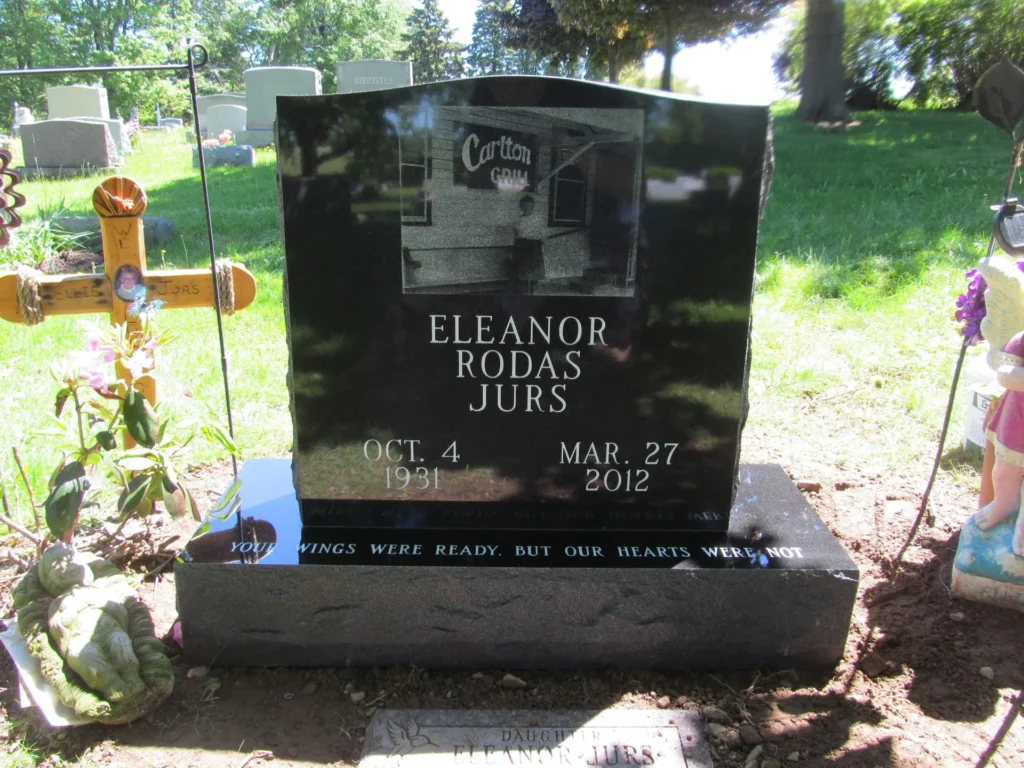
Document the mistake immediately. Take clear photos of the error and find your signed proof copy. That proof is the legal record of what you ordered. It defines who made the mistake and who covers the cost of fixing it.
Small corrections can sometimes be made on-site. Portable sandblasting equipment can fix a single wrong letter or digit without moving the stone. Larger changes (incorrect dates, spacing adjustments, anything that affects the overall layout) typically require the stone to come back to the shop or be replaced.
The question of who pays comes down to one comparison: does the error appear on the proof you approved? If it does, the correction cost typically falls on the family. If the engraved stone differs from the signed proof, the company is responsible.
Read your contract before you sign the original order. Some monument company contracts include a clause limiting the company’s liability for engraving errors, even when the company made the mistake. Ask about this specifically before the order is finalized. Save every written record about inscription details. Those are what protect you if a dispute comes up.
One Question Worth Asking Before You Leave
Before you approve the proof, ask your specialist whether they’ll coordinate directly with the cemetery before the stone goes into production.
At Woodside Granite, we work directly with the cemetery as part of the ordering process, confirming installation requirements, inscription area dimensions, and content guidelines before production begins. That step catches the compliance issues that only surface after a stone is already cut. It also means you’re not navigating cemetery permit language alone during an already difficult time.
The proof checklist takes twenty minutes. Fixing a mistake on a stone that’s already installed can take months. Go through it.
Questions Families Ask Before Ordering
Can a headstone engraving be corrected after it’s been cut?
Small corrections can sometimes be made on-site with portable sandblasting equipment. Larger changes, or anything that affects the layout spacing, typically require the stone to be brought back to the shop for re-engraving or replaced entirely. Whether the company covers the cost depends on whether the error appears on the proof you approved.
How long does headstone letter fill paint last in a New York winter?
With professional monument enamel (lithichrome) applied correctly, most inscriptions hold well for 10 to 20 years before a touch-up is worth considering. In exposed, open sections where road salt and freeze-thaw cycles are consistent, the lower end of that range is more realistic. A sheltered or shaded location in the cemetery holds paint noticeably longer than an open, exposed spot.
What documents should I bring when ordering a headstone inscription?
Bring the death certificate and, if possible, the birth certificate. These are the authoritative sources for the legal name, middle name, and dates. Comparing the proof against the official documents rather than relying on memory is how most date errors get caught before production starts.
Can a second inscription be added to a companion stone years later?
Yes, but only if the original layout reserved space for it. Confirm at the time of ordering where the second inscription will be placed, that the space is protected in the design, and what the process is for adding it later so the font and engraving style can be matched by the same company.
Does cemetery approval include checking the inscription for accuracy?
No. Cemetery approval checks whether the stone complies with the cemetery’s size, material, and content rules. Verifying the inscription for factual accuracy, correct spelling, correct dates, and correct names is entirely the family’s responsibility before the proof is approved.