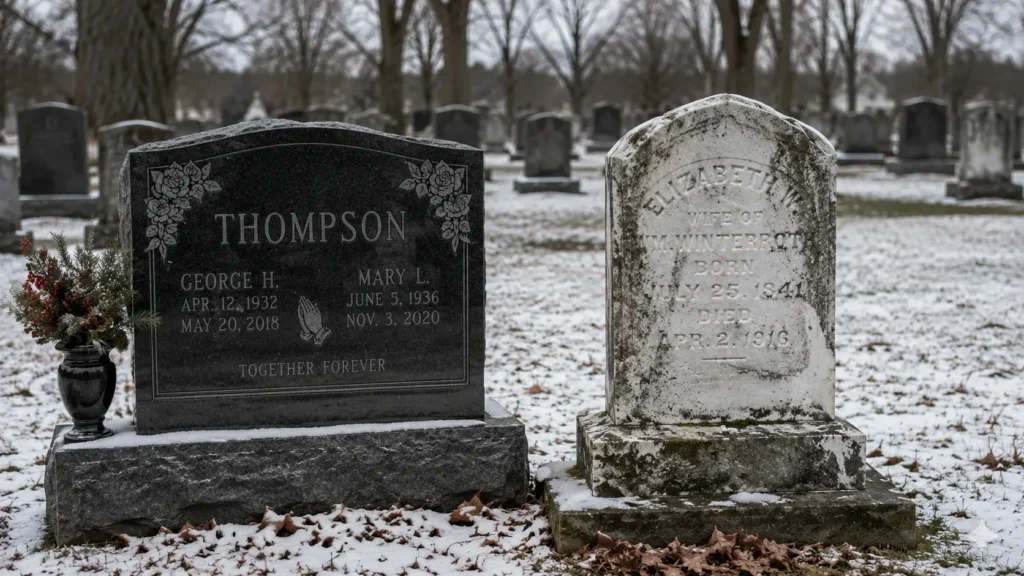
For nearly every outdoor memorial in this region, granite is the right call. Marble still has a place, but a narrower one than most families realize until they’ve seen what a hundred winters can do to it. Here’s the honest comparison, plus what to do if your family already has a marble stone that’s starting to show its age.
| Granite | Marble | |
|---|---|---|
| Formed from | Cooled magma (igneous rock) | Limestone under heat and pressure (metamorphic rock) |
| Western New York winters | Barely absorbs water, holds up well through freeze-thaw cycles | More porous, wears faster over decades of freezing and thawing |
| Acid rain resistance | Strong | Weaker, reacts with the stone’s calcium carbonate |
| Maintenance | Low, occasional cleaning | Higher, more prone to staining and discoloration |
| Color options | 90+ named colors | Mostly white, gray, and black, with natural veining |
| Typical cost | Generally lower | Generally higher, more labor to carve |
| Best fit | Outdoor cemetery memorials in this climate | Indoor or mausoleum settings, or a family set on that classic look |
What granite and marble actually are
Granite forms deep underground from cooled magma, which is why it ends up so dense and hard. That same tight crystal structure is what makes it resist scratching, chipping, and the slow wear that comes from a century of rain, snow, and sun.
Marble starts out as limestone, then gets compressed under heat and pressure until it turns into the soft, veined stone people picture when they think of classic cemetery statuary. It carves beautifully because of that softness. That’s also exactly why it doesn’t hold up outdoors the way granite does.
How each one holds up through a Western New York winter
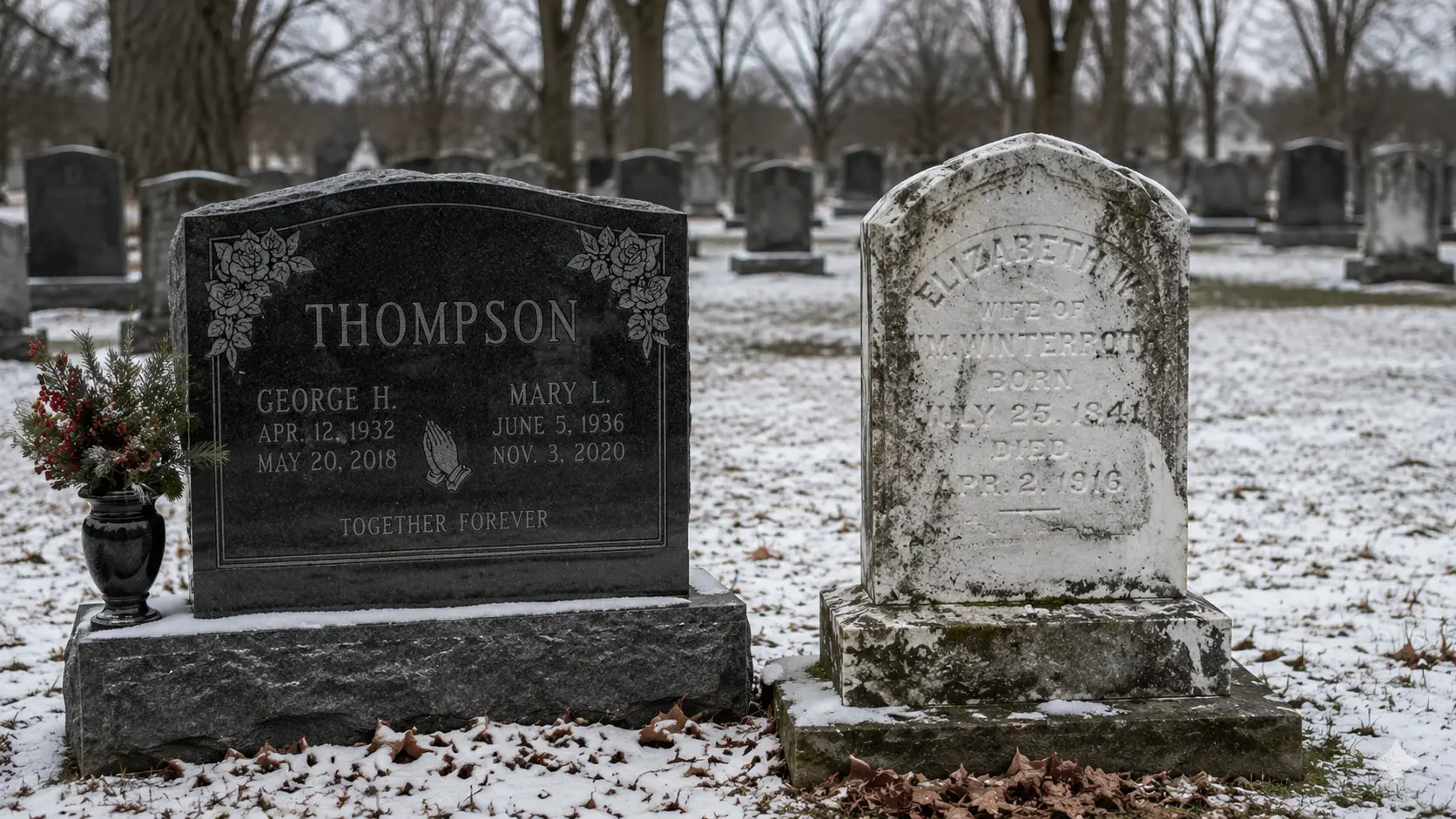
This is where the comparison gets real for families in Albion, Rochester, Batavia, and Warsaw. Western New York doesn’t just get cold. It freezes and thaws over and over through the winter months, and that cycle is hard on any porous stone. Water works its way into tiny cracks, freezes, expands, and widens the crack a little more each time it happens. Granite barely absorbs water in the first place, so this cycle does almost nothing to it over the years. Marble absorbs more, and after enough winters, that difference starts showing up as cracking, pitting, and lettering that’s harder to read than it used to be.
Walk through the older sections of a cemetery like Mount Albion or Holy Sepulchre and you’ll often see this play out in stone, row by row. Marble markers from a hundred-plus years ago tend to be soft at the edges now, with inscriptions worn down to a guess. Granite markers from the same era, sometimes just a few feet away, still read clearly. It’s not a coincidence, and it’s not just our experience. It’s the pattern across nearly every cemetery in this climate.
Acid rain adds to the problem for marble specifically. The calcium carbonate that gives marble its smooth shine reacts to acidic moisture in a way granite’s mineral makeup simply doesn’t.
Color, Detail, and Design Options of Headstone
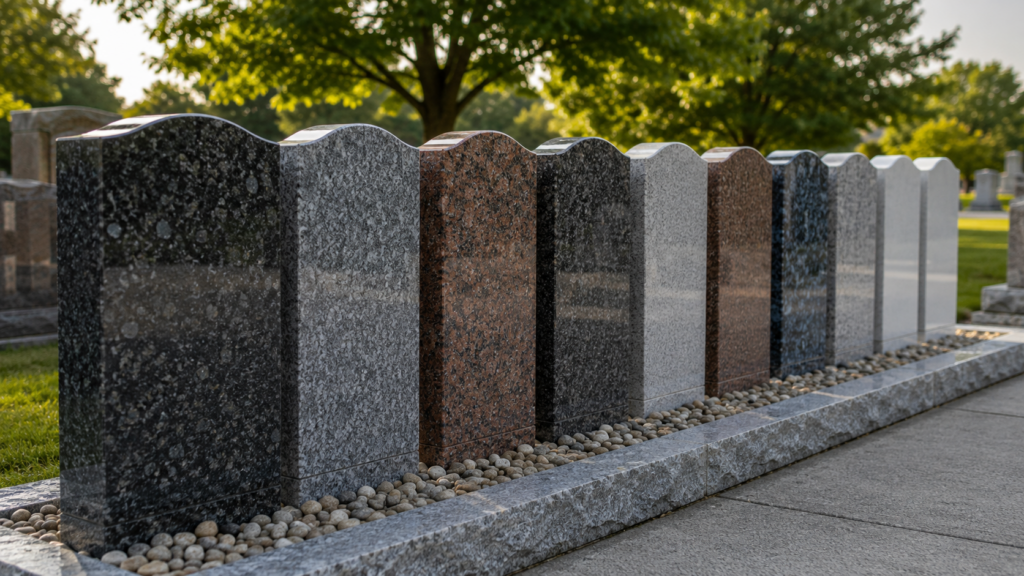
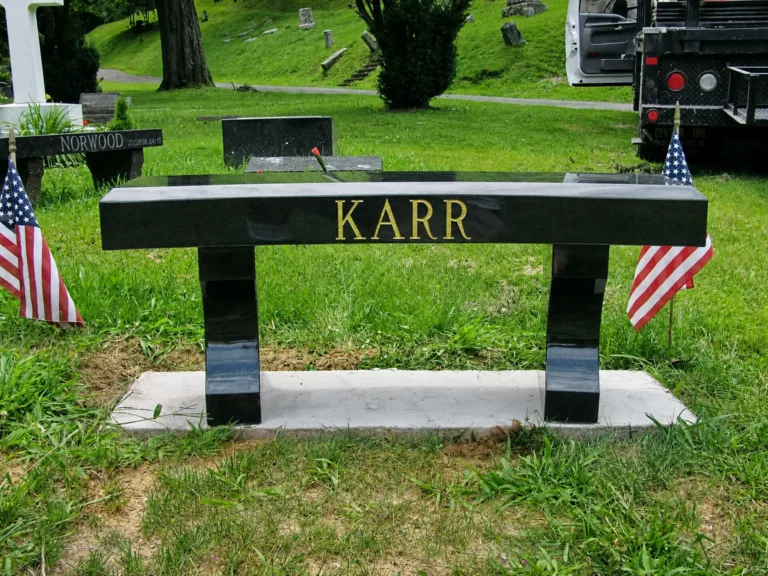
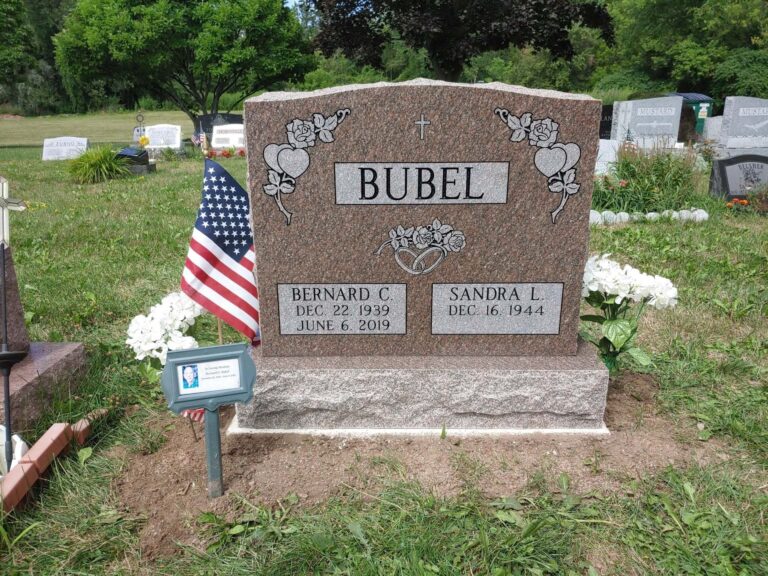
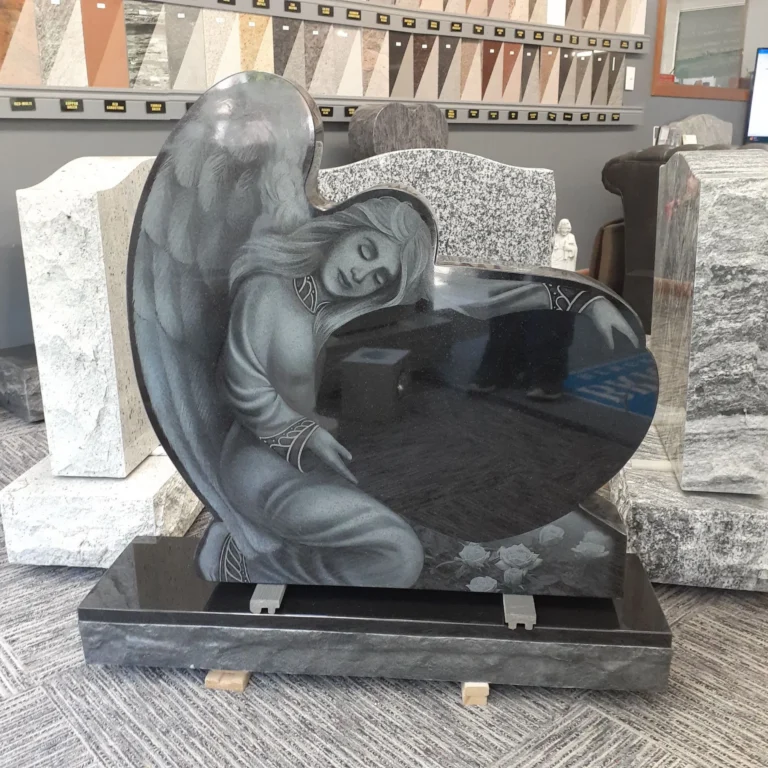
Granite also gives families more to work with. We carry more than 90 named granite colors, from deep, traditional shades like Academy Black to warmer tones like Autumn Red, plus the Bahama Blue one of our customers chose for a recent memorial. As she put it once she saw the finished stone, she “hadn’t seen any like it.” Granite’s hardness also holds fine detail well over time, which is part of why hand etching done by artists like Melissa Trinidad, our Artist-in-Residence, still looks sharp decades after installation.
Marble’s color range is narrower, mostly white, gray, and black. The veining in higher-end marble does have a classic, almost sculptural look that some families specifically want, particularly for an indoor or mausoleum setting where weather isn’t a factor.
What this actually costs
Granite tends to run less expensive than marble for a comparable memorial, though the gap isn’t always as wide as people assume going in. Marble’s softness makes it easier to carve, but that same softness shifts more of the cost into labor and into the rarer veining patterns families often request. Size, color, and design complexity move the number more than the material alone does, so it’s worth getting a direct estimate rather than guessing at a flat price difference.
If your family already has an aging marble monument
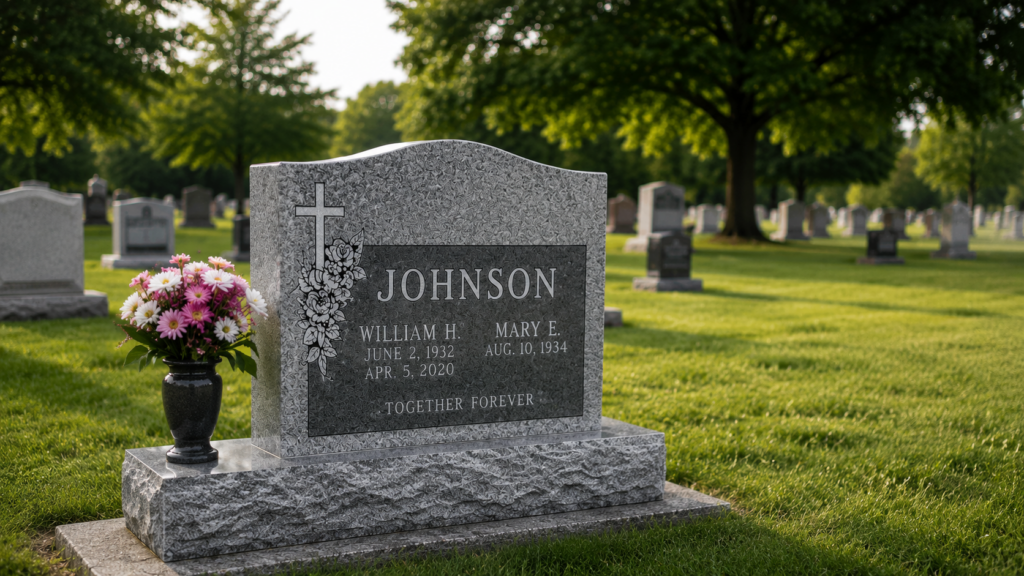
A good number of the families we talk with aren’t choosing between granite and marble for a brand-new memorial. They’re standing in front of a marble stone their grandparents or great-grandparents chose, and it’s starting to crack, stain, or fade. That’s a different conversation, and one worth having before assuming the stone needs to be replaced.
Monument restoration and cleaning can often bring an older marble memorial back to a legible, respectable condition without starting over from scratch. How much can be restored depends on how far the damage has gone, so the honest first step is just having someone take a look.
Where marble still makes sense
Marble holds up much better indoors, away from freeze-thaw cycles and direct weather. Inside a mausoleum, it’s a genuinely solid choice. Some families also simply prefer that softer, classic look enough to accept the extra upkeep it needs outdoors, and that’s a fair reason too. It’s just a smaller list of situations than most people assume when they start comparing the two.
Before you decide
Check with the specific cemetery first. Some accept marble without restriction, and some set their own rules about which materials they’ll allow in certain sections, so it’s worth confirming before you fall in love with a design. We work directly with cemeteries on this as part of our process, so that part doesn’t fall on you.
If granite sounds like the direction for your family, take a look at our full color selection, or speak with us about what we’d recommend for your cemetery and budget.
Frequently Asked Questions
Is granite or marble better for a headstone?
For most outdoor cemeteries in Western New York, granite is the better choice. Granite resists moisture, freeze-thaw damage, staining, and weathering far better than marble, helping inscriptions remain clear and legible for generations.
How long does a granite headstone last compared to marble?
A properly installed granite headstone can last for centuries with minimal deterioration. Marble can also last a long time, but outdoor exposure gradually softens the surface and wears down lettering, especially in climates with frequent freezing and thawing.
Why do old marble headstones become difficult to read?
Marble contains calcium carbonate, which slowly reacts to rain, moisture, and environmental pollutants. Over decades, the stone surface erodes, causing carved inscriptions and decorative details to lose definition and become harder to read.
Can an old marble headstone be restored instead of replaced?
In many cases, yes. Professional monument cleaning and restoration can improve appearance, remove biological growth, reduce staining, and make inscriptions more legible. The success of restoration depends on the condition and age of the memorial.
What is the best granite color for a headstone?
There isn’t a single best color, but black granite remains one of the most popular options because it provides excellent contrast for lettering, portraits, and laser etching. Gray, red, and blue granites are also popular choices depending on personal preference and cemetery requirements.