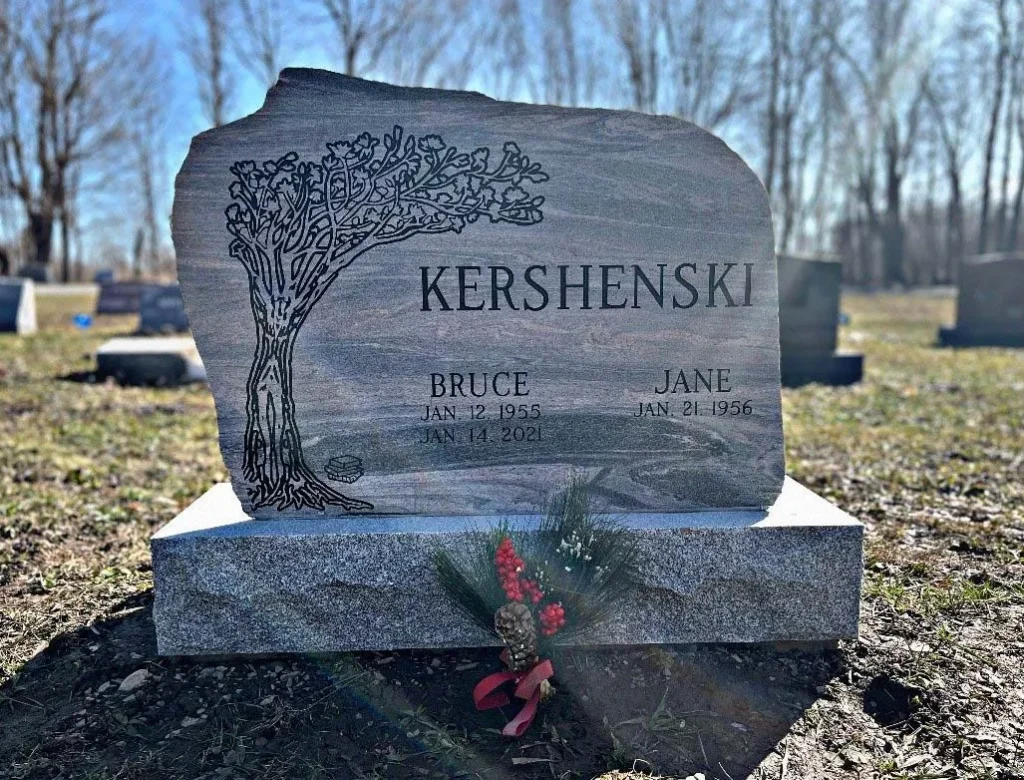
Headstone, tombstone, and gravestone all refer to the same thing in modern use. If you’ve been using the words interchangeably, you’ve been getting it right. Each one started with a completely different meaning centuries ago, though, and knowing that history helps when you’re navigating a first conversation with a monument company or trying to make sense of what you’re being shown.
All Three Mean the Same Thing Today
Headstone, tombstone, and gravestone are used interchangeably in the US monument industry. All three describe the same thing: a stone marker placed at a burial site to identify the deceased. Headstone is the preferred professional term, used most often by monument companies, cemetery offices, and funeral directors. But any of the three is understood immediately by anyone in the field, and none of them is wrong.
Each word originally had its own specific meaning. Tombstone described the stone lid of a coffin. Gravestone was a flat slab placed over a burial site. Headstone, when it first appeared, had nothing to do with cemeteries. All three came to mean the same thing only after several centuries of gradual change.
The table below captures where each word started and what it refers to now.
| Term | What It Originally Meant | What It Means Today |
| Gravestone | A flat stone placed over a burial site (before 1250) | Interchangeable with headstone and tombstone |
| Tombstone | The stone lid of a coffin (mid-1500s) | Interchangeable with headstone and gravestone |
| Headstone | A building cornerstone (around 1400) | Upright grave marker; the preferred professional term |
All three work equally well when you call a monument company. The only difference you’ll notice is that tombstone carries a slightly older, more literary tone than the other two. That’s a reflection of its history, not a sign it means something different.
Where Each Word Came From
Gravestone is the oldest, tracing back to the 1200s. Tombstone came roughly three centuries later. Headstone is the newest of the three, and it’s the only one that didn’t start in a cemetery at all.
Gravestone: The Oldest of the Three
Of the three, gravestone has the longest history in English. Its earliest recorded use dates to before 1250, making it several centuries older than either of the other two. What it described back then looked nothing like a modern grave marker. It was a large, flat stone slab laid horizontally over a burial plot to cover and identify it. The shift to upright markers came later, and the word came along with it.
Tombstone: It Once Meant a Coffin Lid
Tombstone arrived in English around the mid-1500s from a Greek word for burial mound. Its first meaning was literal: the stone slab used to seal a stone coffin. As stone coffins fell out of use, the word broadened. By the 1700s it was being applied to any grave marker. For most of the following three centuries, tombstone was the most commonly written of the three words in English. Headstone only caught up in recent decades, which is why tombstone still carries a slightly older, more literary ring.
Headstone: It Started as an Architecture Term
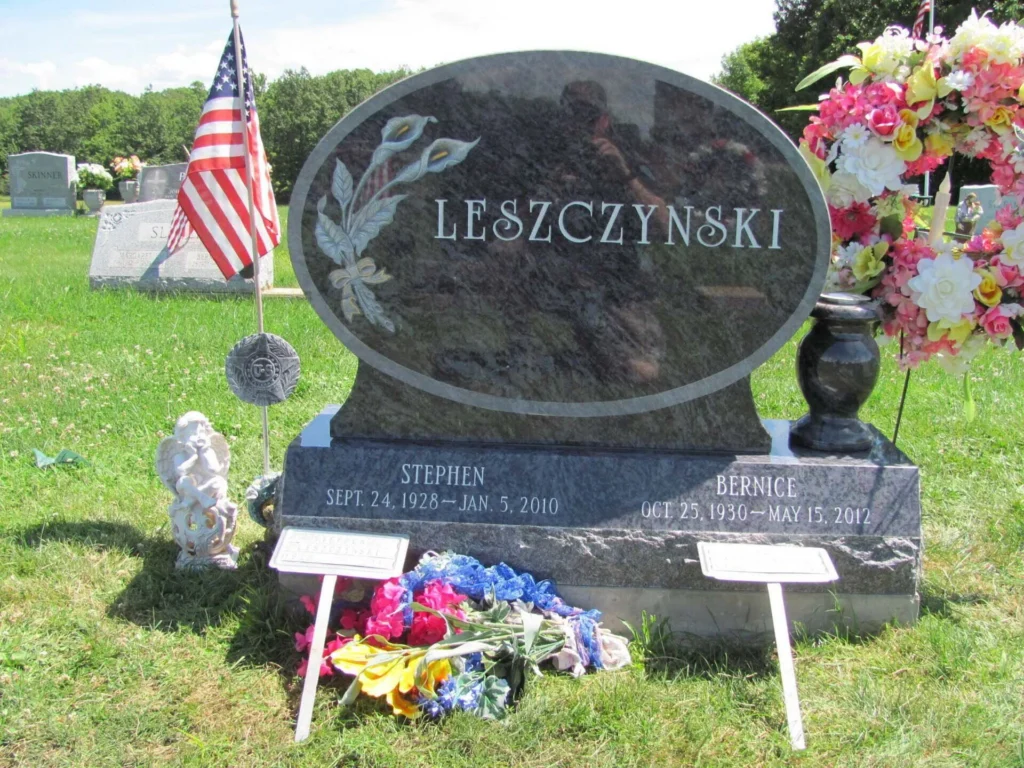
Before headstone had anything to do with graves, it was used as a synonym for cornerstone, the ceremonial stone placed at the corner of a building to record its construction date. The word appeared around 1400 in this architectural sense. Over the following centuries it migrated to burial grounds, and by 1775 it specifically meant an upright stone at the head of a grave. It’s been the standard professional term in the US monument industry ever since.
That covers the three main terms. Beyond them, a handful of related words come up the moment families start working with a monument company or cemetery office.
Other Terms You’ll Hear at a Monument Company
Monument, grave marker, flat marker, slant marker, companion headstone, footstone, cenotaph. None of these are complicated once you know what each one describes.
Monument is the broader category. In cemetery use, it often refers to a larger or more elaborate piece: a structure serving a family plot, a stone carrying multiple names, or an architectural form. Monument companies use the word across everything from simple individual stones to large civic commissions.
Grave marker is the true umbrella term. It covers every type of grave identification regardless of size, orientation, or material. A flat bronze plaque set flush with the ground is a grave marker. So is a 30-inch upright granite headstone. Cemetery regulations use the term grave marker because it applies to all formats without implying a specific style.
Upright headstone is what most families picture. It stands vertically at the head of the grave and typically has two parts: the die (the upright piece with the inscription) and the base (the flat slab it sits on). Most cemeteries permit upright headstones throughout, though some sections allow only flat stones.
Flat markers are stones installed flush with the ground surface. Many cemeteries require them in specific sections for lawn maintenance access. Slant markers sit in between, typically 12 to 16 inches tall with an angled face, offering some upright visibility in a smaller footprint.
A few more worth knowing: a companion headstone carries two names on a single stone, usually for a married couple. A footstone is a smaller marker at the foot of the grave, opposite the headstone; still found in older cemeteries but mostly phased out today. A cenotaph marks someone who is honored at a site where they aren’t actually buried, most often in veterans memorials.
With those terms clear, the next question is which of the three main words to actually use.
Which Word Should You Use?
Any of them works. Monument companies hear headstone, tombstone, and gravestone daily and understand all three immediately. There is no wrong choice when you call or visit a showroom. If you want to match the professional standard, headstone is the safest pick. It’s the term most consistently used by monument companies, funeral directors, and cemetery offices.
Each word carries a slightly different feel, though. Headstone is the trade-language default. Gravestone comes up more in genealogy records and older writing. Tombstone has a slightly more old-fashioned tone, which is why it turns up in Westerns and history books more often than in a showroom.
What actually shapes that conversation isn’t vocabulary. It’s specifics: what type of marker the cemetery section allows, the material, the inscription, and the design.
In Western New York, granite has been the standard material for generations, and for practical reasons. It’s non-porous, which means freeze-thaw cycles don’t penetrate the surface the way they do with marble or softer stone. Marble inscriptions can show visible surface erosion within years in an upstate winter. Granite holds its edge for decades. For a closer look at that comparison, our granite vs marble guide goes deeper.
Frequently Asked Questions
Is there any real difference between a headstone and a tombstone?
In modern use, no. Both describe a stone marker at a burial site, and both are used interchangeably across the monument industry. The historical distinction (tombstone once referred to a stone coffin lid; headstone to a marker at the head of a grave) hasn’t been relevant for centuries. Either word works when you call a monument company or cemetery office.
What’s the difference between a headstone and a monument?
Headstone generally refers to an individual upright stone at a single grave. Monument is the broader term. It covers larger structures, family plots, and more elaborate pieces. Monument companies often use both words interchangeably, but monument tends to describe something larger or more customized. A stone carrying two names, usually for a couple, is often called a companion monument or companion memorial.
What is a grave marker, and is it different from a headstone?
Grave marker is the umbrella term for any object that identifies a burial site, regardless of size, orientation, or material. A flat slab set flush with the ground is a grave marker. So is a 30-inch upright headstone. Cemetery regulations use the term grave marker because it covers all formats (upright stones, flat markers, slant markers, and bronze plaques) without implying a specific style.
What is a cenotaph?
A cenotaph marks someone who is honored at a site but isn’t buried there. The word comes from Greek, meaning “empty tomb.” Cenotaphs appear most often in veterans memorials, placed for soldiers whose bodies were never recovered or who were buried elsewhere. Many civic monuments also serve as cenotaphs, including memorials for fallen officers or public figures installed in parks and public buildings.