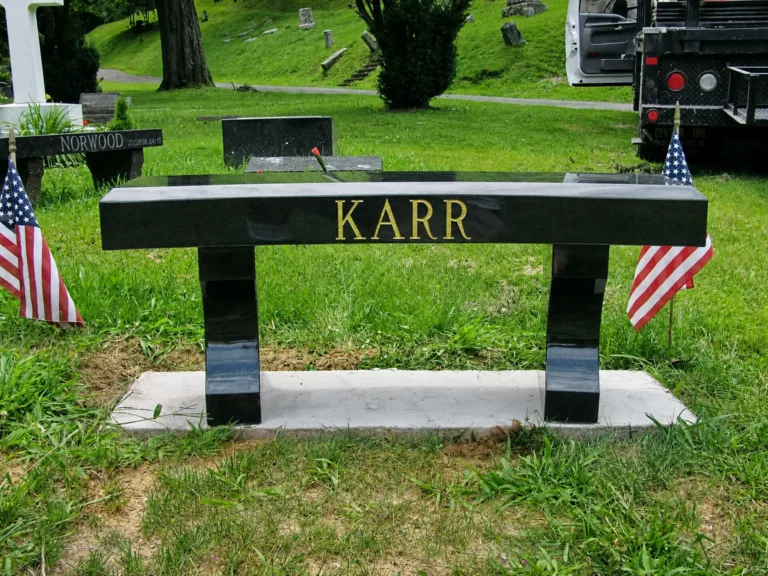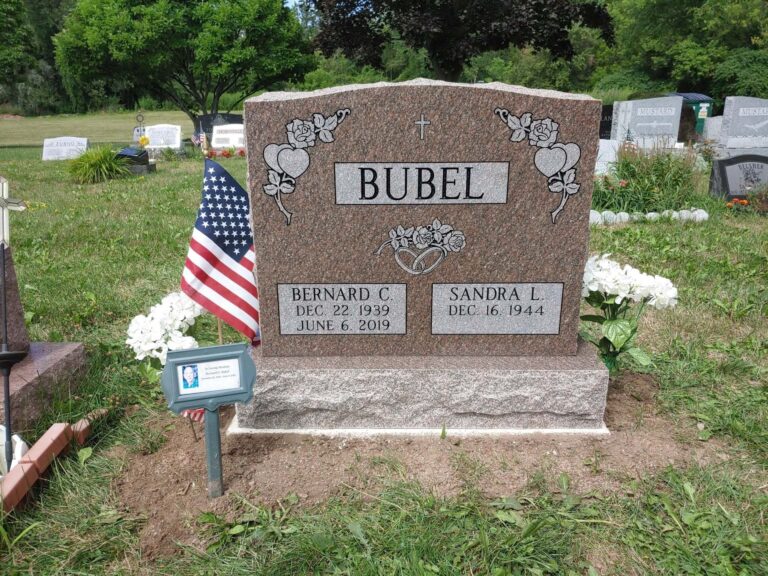
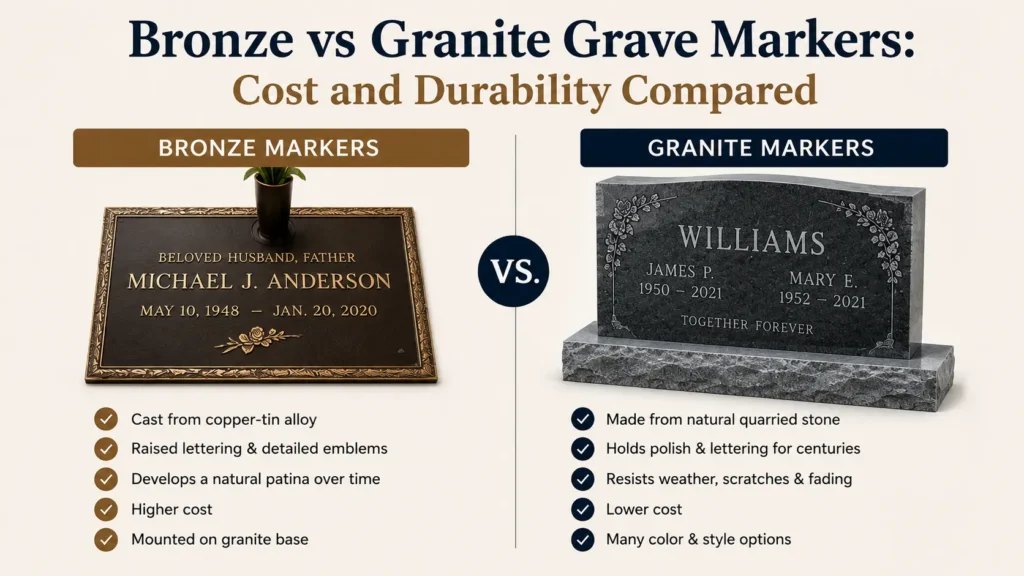
Granite grave markers are cut from quarried stone. They hold their polish and lettering for well over a century with almost no upkeep, and they usually cost less than bronze for a similar size. Bronze grave markers are cast from a copper-tin alloy. They’re almost always mounted on a granite base instead of standing alone, and they cost more because of the casting and finishing work. Still, bronze can hold raised lettering, emblems, and relief artwork that granite can’t fully match.
Granite keeps its color for generations. Bronze ages differently. It slowly grows a soft green patina, and some families like that look while others have it cleaned off. Both materials hold up well through a real winter, granite because it’s so hard, and bronze because of the metal itself. Bronze does carry one tradeoff worth knowing about. Its scrap value has sometimes made it a target for theft in certain cemeteries.
Beyond the look, what usually settles the decision is the fully installed cost once a granite base and foundation are added. You’ll also want to check whether your cemetery even allows the material you’re leaning toward. Some cemeteries only permit one option in certain sections.
What Bronze and Granite Markers Are Made Of
Bronze starts as molten metal. It’s roughly 80% copper, with tin and a few trace metals mixed in, then poured into a mold. That casting process lets bronze hold crisp raised lettering, cast emblems, and fine relief detail for decades, without the edges ever softening. It’s a big reason military and civic memorial plaques are so often made from bronze. The metal can carry a level of detail that’s hard to match in stone.
Granite goes the opposite direction. It’s quarried, cut, and polished, rather than poured. Granite gets its color from its mineral mix, mostly quartz and feldspar with some mica. That’s why it comes in so many shades, from charcoal black to deep red to soft blue gray, and why it resists scratching, chipping, and weathering so well. The stone was forming underground for millions of years before anyone cut it into a memorial shape.
How Each Material Holds Up Over Time
Granite wins on raw longevity. A well-finished granite marker can hold its polish and lettering for well over a century. Freeze-thaw cycles, the kind Western New York gets plenty of every winter, are exactly the kind of stress granite is built to handle. It doesn’t need sealing, painting, or any real upkeep beyond an occasional gentle wash.
Bronze is durable in a different way. It doesn’t crack or chip the way stone can if it’s handled roughly. Once that green patina forms, it actually protects the metal underneath instead of damaging it. The tradeoff is that the look changes over time. That’s the part some families plan for, and the part others don’t expect until it happens.
That scrap-value risk mentioned earlier is real. It’s not just an internet rumor. It has made national news more than once, with thieves stripping hundreds of bronze plaques from a cemetery at a time. It doesn’t happen everywhere, and it isn’t a reason to rule out bronze on its own. It’s just worth knowing before you decide, the same way you’d want to know about any real tradeoff.
What You Can Customize With Each Material
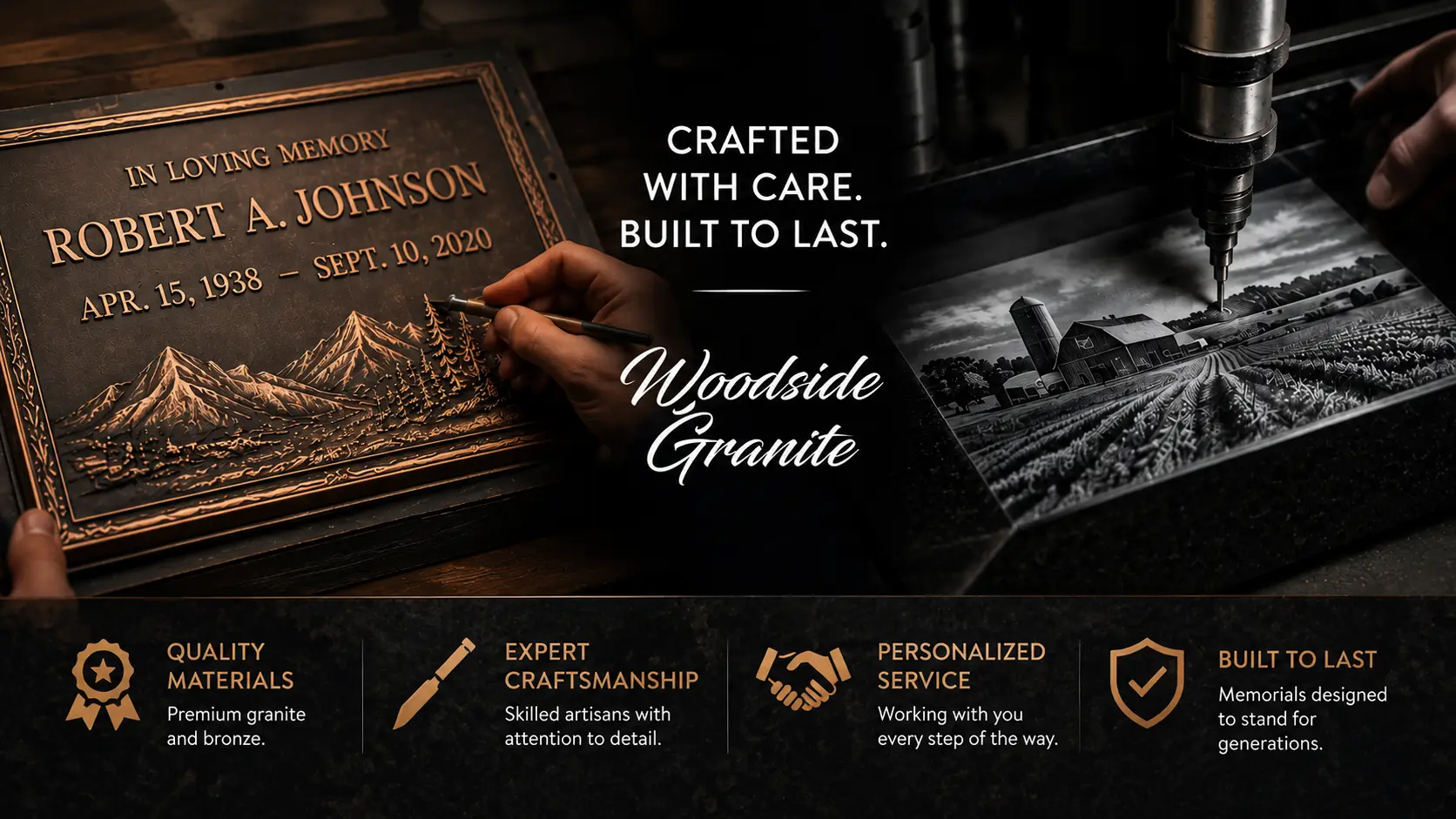
Bronze’s casting process makes certain things easy that granite can’t quite match. Bronze plaques with raised lettering, dimensional emblems, and bas-relief artwork all come out with real depth. You can actually feel the texture if you run your hand over it. If a family wants a military insignia, a coat of arms, or a sculpted scene with real texture, bronze is built for that.
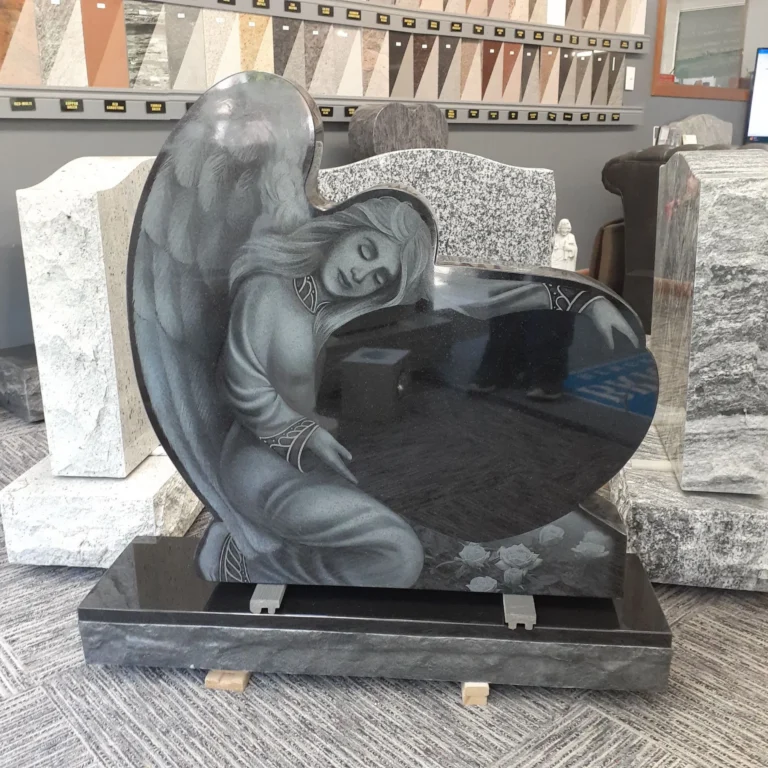
Granite earns its detail a different way. Etching, whether done by hand or by laser, can put a portrait, a farm scene, or a fully custom image onto polished stone. The realism often surprises families the first time they see one finished.
What Bronze and Granite Markers Cost
Search around for bronze or granite marker pricing, and you’ll find numbers that don’t seem to add up. Sometimes they’re ten times apart for what looks like the same product. That’s almost never a mistake. It’s usually because one price covers only the bronze plaque. Another price includes the plaque, the granite base, the foundation work, and installation, all bundled into one total.
Here’s roughly where each format lands, based on pricing reported by monument providers and memorial retailers nationwide:
| Marker type | Granite | Bronze (typically includes a granite base) |
|---|---|---|
| Flat or lawn-level marker, single grave | $200 – $1,000 | $800 – $3,000 |
| Companion marker, two graves | $2,000 – $5,000 | $2,000 – $6,000+ |
| Upright monument | $1,000 – $5,000+ | Uncommon as a full upright; bronze is almost always a mounted plaque, not a freestanding piece |
| Cremation niche plaque | $200 – $600 | $200 – $800 |
Cemetery Rules Often Decide This for You
Plenty of families pick a material first and find out about cemetery restrictions second. That’s the wrong order to do it in. Some cemeteries, particularly lawn-level memorial sections, only allow flat markers in one specific material, so the mowing crews can maintain the grounds without obstruction. Others are fine with either bronze or granite, as long as the size and foundation specs are met.
This is one of the more frustrating parts of the process for families handling it alone. That’s exactly why we act as the direct point of contact with the cemetery on every order. We confirm what’s allowed before any design work is finalized. That way, families never fall in love with a design the cemetery won’t actually accept. If you’re not sure what your own cemetery permits, that’s a quick phone call we’re glad to make on your behalf.
How Woodside Granite Works With Both Materials
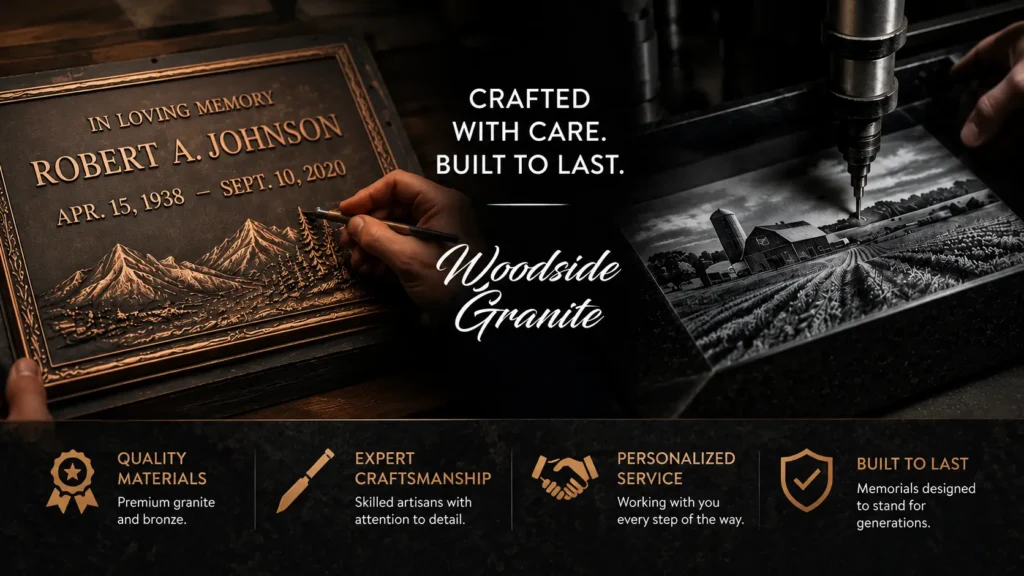
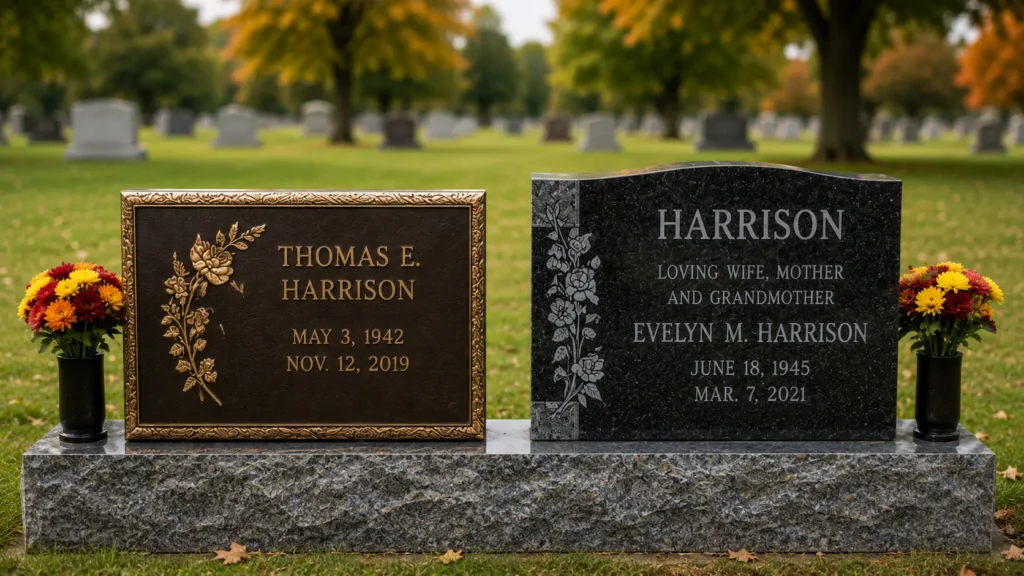
On the bronze side, we craft and install plaques and lettering in-house. That includes braille options, set onto a new or existing monument. This covers the bronze-on-granite format most families end up choosing. On the granite side, we work with more than 90 named colors, and the design and lettering stay in-house rather than going through an outside supplier. Either way, one specialist handles the design, the cemetery coordination, and the installation.
Frequently Asked Questions
Is bronze or granite better for a grave marker?
Granite generally lasts longer with less upkeep, and it costs less for a similar size. Bronze offers a smoother, more even metal look with raised detail that many families like. The better answer usually depends on your cemetery’s rules more than on personal taste alone.
Why does a bronze grave marker turn green?
That’s patina, a natural result of bronze reacting with air over many years outdoors. It’s not damage, and in most cases it actually protects the metal underneath. Some families leave it as is, and some have it cleaned now and then to keep the original bronze color.
Can a granite headstone include a bronze plaque?
Yes, and it’s one of the most common formats in the industry. A bronze plaque mounted on a granite base combines bronze’s raised detail with granite’s durability, and it’s the type of bronze work we craft and install in-house.
Is it true that bronze grave markers get stolen from cemeteries?
It happens, and it’s made national news more than once, since bronze carries real scrap value. It’s not a reason to avoid bronze completely, but it’s a fair thing to think about, along with cost and your cemetery’s own rules.
Does every cemetery allow both bronze and granite markers?
No. Some cemeteries, especially lawn-level sections, permit only one material to keep maintenance consistent across the grounds. Checking with the cemetery before finalizing a design avoids paying for a marker that has to be changed later, which is exactly the kind of check we handle for families before any order is finalized.