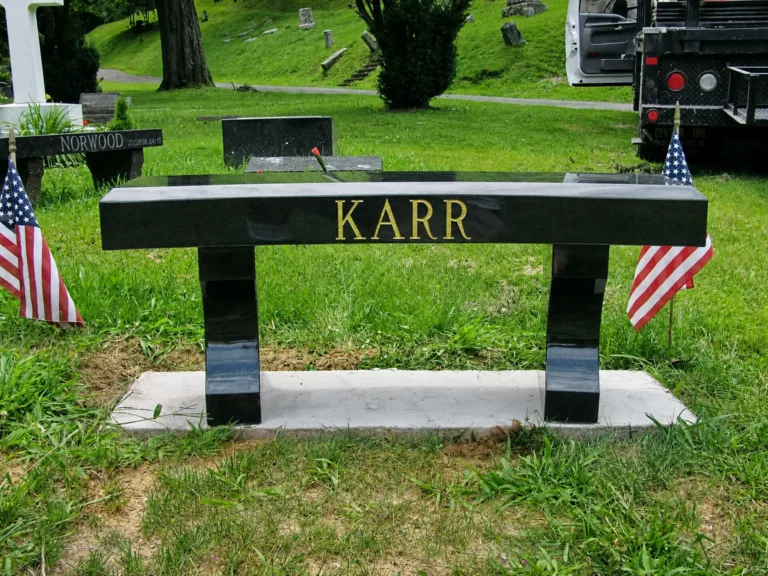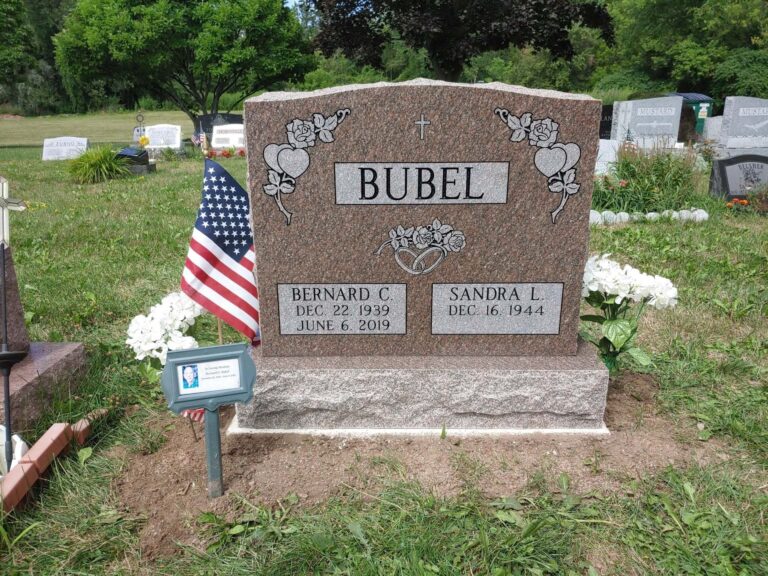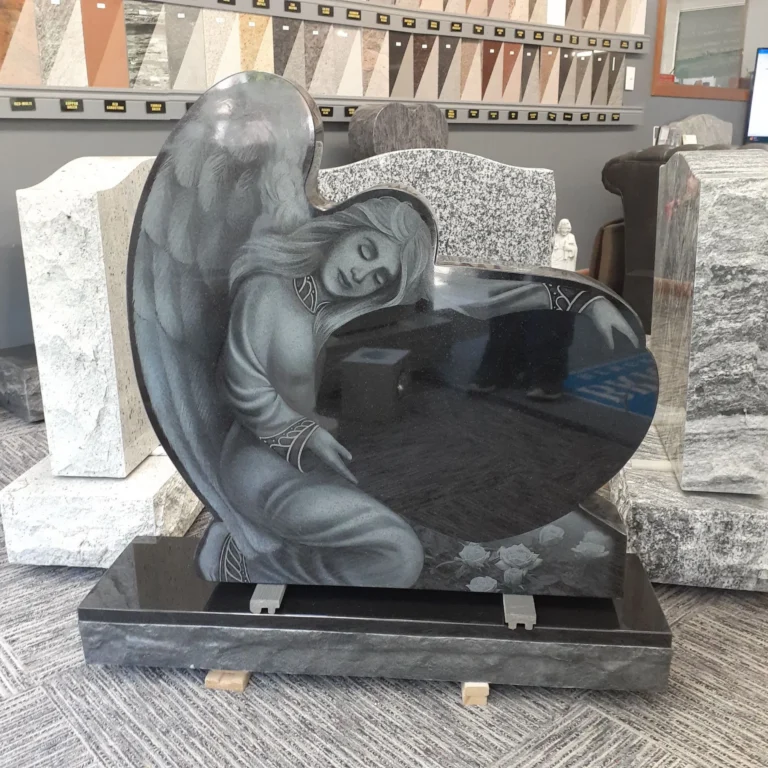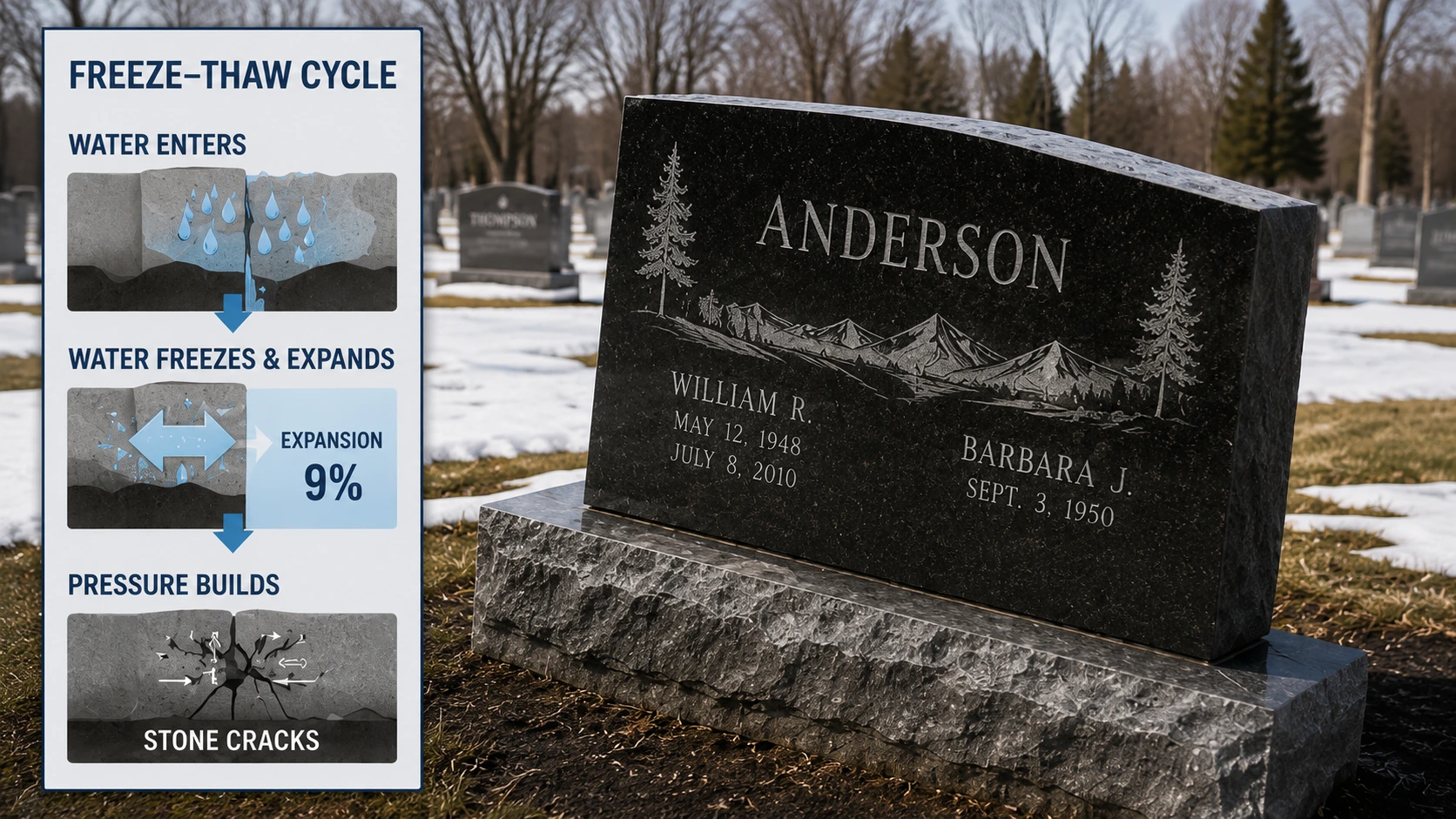
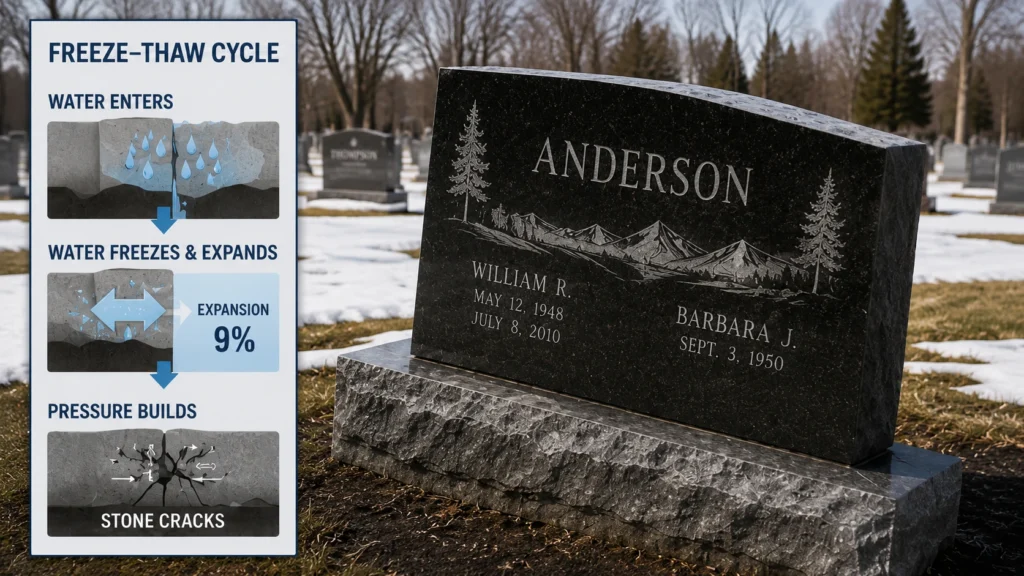
Freeze-thaw cycles are the leading cause of monument damage in Western New York. When moisture enters micro-cracks in stone and then freezes, the water expands by roughly 9% in volume. That internal pressure builds until it splits stone from the inside out. In WNY, where the frost line runs 42 to 48 inches deep and temperatures swing between freezing and thaw dozens of times each winter, the damage compounds year after year, on every material and in every cemetery, regardless of how recently the stone was set.
Why Western New York Is Especially Hard on Monuments
A granite memorial placed in Rochester or Batavia faces a harder winter than one placed almost anywhere south of the state line. Lake Erie and Lake Ontario drive rapid temperature swings across the region. The same lake-effect weather that brings heavy snow to Albion, Medina, and the Genesee Valley also creates the repeated cycling between freeze and thaw that wears stone down far faster than sustained cold ever would. A single WNY winter can produce 30 or more of those cycles.
The soil adds another layer of difficulty. Much of Orleans, Genesee, and Wyoming County sits on heavy glacial clay, left behind after the last ice age. Clay holds water far longer than sandy or loamy soil. Water pooling near a monument’s base in October is still there when the temperature drops in November. That combination of slow drainage and deep, repeated freezing is what makes this region particularly hard on older memorials.
The frost line itself matters for foundations. At 42 to 48 inches deep, ground freeze here is substantial. Any monument sitting on a foundation shallower than that is vulnerable to the upward forces that freezing soil generates, season after season.
What Freeze-Thaw Actually Does to Stone
The process starts small. Rainwater or snowmelt finds a hairline crack. It settles in. When temperatures drop below 32 degrees, that water freezes. Because it expands by roughly 9% in volume, the pressure inside that crack grows until the surrounding stone gives way. The crack widens. The next freeze continues where the last one left off.
That’s surface damage, and it’s visible. The deeper concern is delamination.
Delamination happens when moisture works its way into the internal structure of a stone rather than just the surface. As freeze-thaw cycles repeat, internal layers begin to pull apart. The stone looks intact from the outside, but it’s weakening from within. The way to check: tap the surface lightly with a fingertip. A solid sound means the stone is holding together. A hollow sound means the layers have separated and a professional needs to assess it before another winter passes.
Then there’s frost heave. This is the reason monuments lean.
When water in the soil beneath a foundation freezes, it forms what are called ice lenses, compressed sheets of ice that push upward against everything above them. The monument lifts. When the ground thaws, it drops back down. But the soil doesn’t always settle evenly. Over several winters, that slow, uneven movement tilts the foundation. A stone that leaned two inches last spring may lean four inches by next April. It’s not a defect in the stone. It’s a foundation problem caused by forces underground, and it gets worse every year it goes unaddressed.
Biological growth makes all of this worse. Lichen, moss, and algae trap moisture against the surface and hold it there longer than bare stone would. In shaded spots next to a tree or fence line, biological growth can keep the surface wet well into freezing temperatures, feeding the cycle.
Granite Holds Up. Marble Is a Different Story
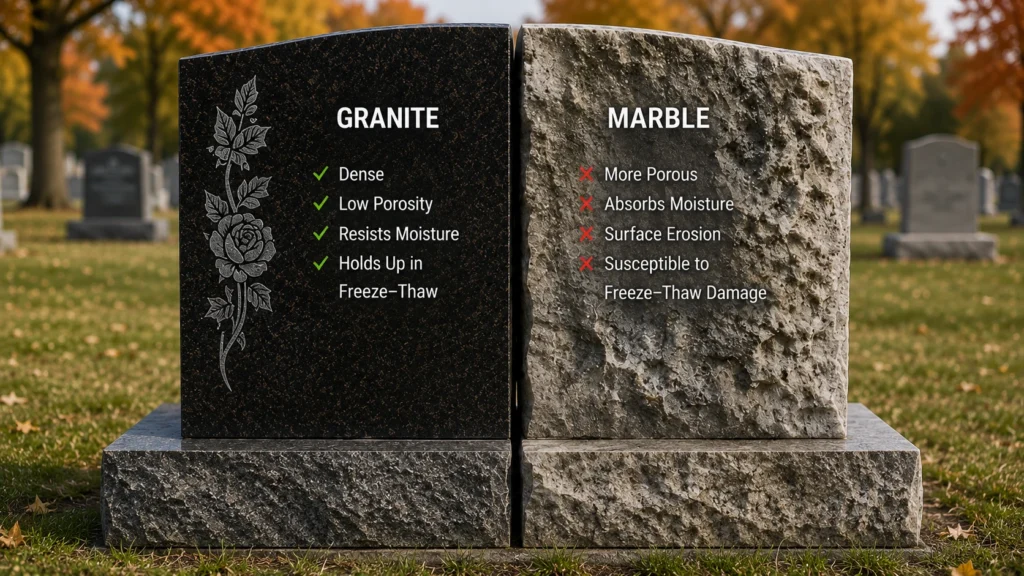
Granite is denser and less porous than marble. Water penetrates it slowly, which gives it a real advantage against freeze-thaw damage. A well-installed granite memorial on a properly set foundation holds up in WNY winters for generations. That’s why granite became the material of choice for modern monuments across this region.
Marble absorbs moisture much more readily. In older cemeteries, you’ll see the effects clearly on stones from the 19th and early 20th centuries. The surface may look rough, almost crystalline. Press lightly with a fingertip and it crumbles slightly, like a sugar cube. That texture signals advanced surface erosion where the stone has lost structural integrity. At that point, the stone needs a professional assessment before any cleaning or handling, because the wrong approach can accelerate the damage.
Bronze plaques face two different risks in WNY winters. Road salt tracked in by plows and foot traffic can collect on bronze surfaces and cause visible corrosion. The less obvious problem involves older monuments with iron anchoring pins. Iron rusts and expands as it oxidizes, by roughly 600% of its original volume. That expansion happens inside the stone, cracking it from within. A rust stain appearing at the joint between monument sections is an early warning worth flagging to a monument company before it becomes a structural failure.
What to Look for on a Spring Visit
April and May are the best months to assess what the past winter did to a memorial. Ground thaw is complete, new cracks are visible, and any shifting from frost heave shows clearly before summer growth covers the base.
Tap the surface with one finger wherever you can reach. A hollow sound in any section signals delamination and needs attention before the next freeze season.
Look at existing cracks. Have they widened since your last visit? A crack running through the base or across a joint is more urgent than a surface scratch. If sections feel loose or pieces have separated, don’t press them back together. Document it with a photo and call a monument company.
Check the level of the stone. Compare it to photos from previous visits if you have them. A lean that’s noticeably worse than last year means frost heave is actively working on the foundation underground.
Look at the surface texture on older marble. The rough, sugary feel that signals advanced erosion is easiest to spot in spring daylight.
If the memorial has a bronze plaque, look for white or greenish buildup on the surface. That’s salt corrosion. It needs professional cleaning, not household cleaners. Products like D/2 Biological Solution, which is pH-neutral and safe for granite and bronze, are what conservators use. Standard dish soap, bleach, and vinegar can etch stone and leave residue that attracts new biological growth.
What to Do Before Winter Arrives
The best time to repair an existing crack is fall, before the first freeze. A hairline crack in October becomes a structural split by April when water enters it and freezes repeatedly over the following months.
Remove leaf debris from around the base of the stone. Accumulated leaves hold moisture against the foundation and slow drainage. That pooling water is exactly what starts the frost heave cycle underground.
Don’t apply a commercial stone sealant. This is one of the most common mistakes families make, and it’s understandable. Sealants sound protective. But most commercial sealants block the stone from releasing moisture naturally. Water already inside the stone gets trapped. When temperatures drop, that moisture freezes, expands, and causes the internal cracking the sealant was supposed to stop. Most granite memorials don’t need a sealant at all. If you’re wondering whether your specific stone needs any kind of treatment, it’s worth a call to a monument company before doing anything.
Which Repairs Need a Professional
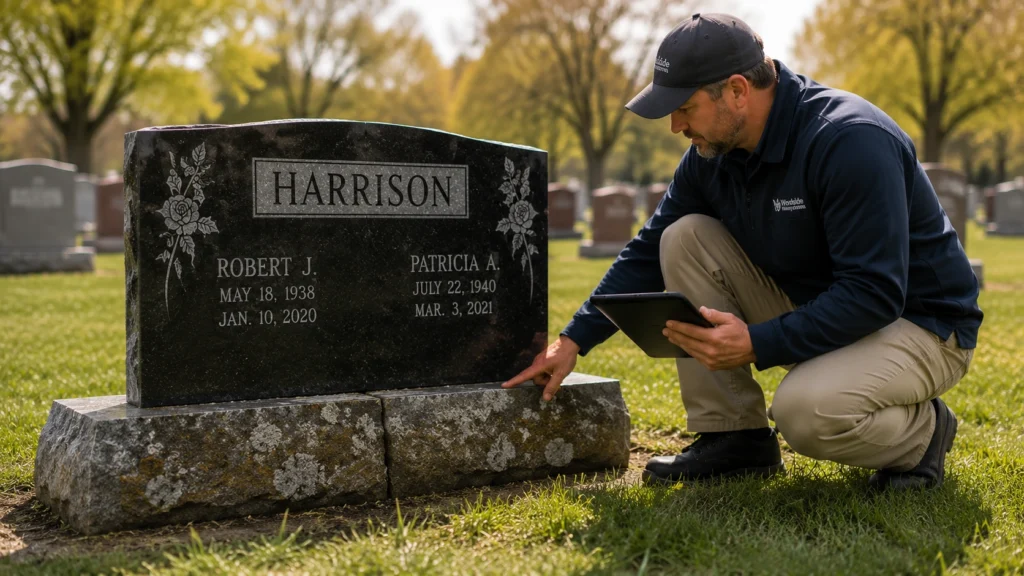
An upright monument weighs 200 pounds or more. Cemeteries across Western New York have rules about who can perform structural work on monuments and what materials are permitted. Attempting to straighten a leaning stone by hand, or using household concrete or adhesive on a crack, can cause additional damage, create a safety hazard, and violate the cemetery’s maintenance agreements.
Resetting a frost-heaved monument means excavating the existing failed foundation, improving drainage with a compacted gravel base, and pouring new concrete below the WNY frost line, at 42 to 48 inches. That depth is what stops the heave cycle from repeating. Without it, a reset stone will start leaning again within a few winters.
Crack repair uses conservation-grade epoxy and, where pins are needed, stainless steel rather than iron. Stainless doesn’t rust, so it doesn’t crack the surrounding granite the way old iron pins do over time.
We take care of the cemetery coordination for all of this. Families don’t have to navigate permit requirements or contact the cemetery separately to figure out who’s authorized to do the work. Cemetery liaison is part of our restoration and cleaning processes. If you find damage this spring, speak with us. We can assess what the memorial needs and walk you through exactly what’s involved before any work begins.
Questions Families Ask
Why is my monument leaning more every year?
Frost heave is almost always the cause. Water in the soil beneath the foundation freezes each winter, pushes the monument upward, and thaws unevenly in spring. After several winters, the foundation is no longer level. The fix is a professional reset with a new foundation poured below the frost line. Pushing the stone back by hand doesn’t address what’s happening underground and usually makes the lean worse the following year.
Can I apply a sealant to protect the stone from winter damage?
Most commercial sealants trap moisture inside the stone instead of keeping it out. Trapped moisture freezes in winter, expands, and causes the internal cracking that the sealant was meant to prevent. Most granite memorials don’t need one. If you’re concerned about a specific stone’s condition, we can advise on whether any treatment actually makes sense for that material.
When is the best time to inspect a memorial for winter damage?
April or May, after the last hard freeze of the season. That’s when new cracks are most visible, frost heave effects are fully apparent, and the ground around the base has settled enough to show any shifting clearly. A brief walk-around visit each spring is one of the most practical things a family can do for an older memorial.